Tire wear limit: why 1.6 mm is not enough
 Luiz Felipe 6 min read
You may wonder: why do I need to identify the tire wear limit if legislation already defines a minimum depth in Brazil?
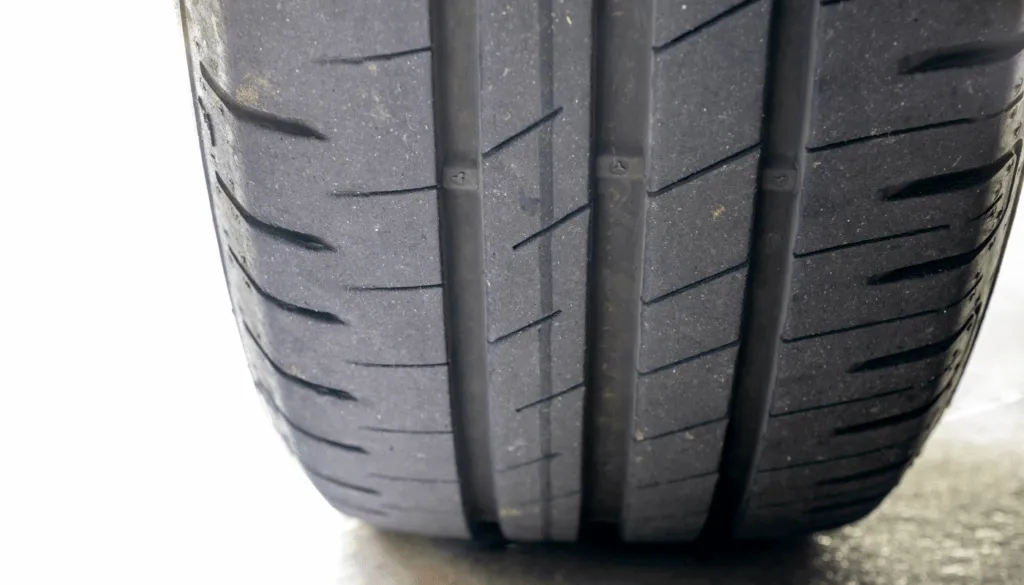
In Brazil, today's reference rule is CONTRAN Resolution No. 913/2022, which considers a tire with remaining tread depth below 1.6 mm noncompliant. The resolution itself also provides that this remaining depth can be checked visually through wear indicators.
Although this legal limit exists in Brazil, running the tread down to 1.6 mm may not be the best decision for those working with retreading. When the tire gets so close to the end of its available rubber, casing assessment is quite likely to reveal signs of fatigue and retreading may be rejected.
That is why, in various operations that manage tires, the limit used usually ranges between 2.6 and 3.0 mm. And the reason is simple:
Removing a tire from use while it still has this “extra” tread depth improves the chances of retreading the asset and increasing its durability.
What are the tire wear limit levels?
Before classifying wear, a technical precaution is worthwhile: the levels below make sense when the fleet compares measurements over time and knows that tire's initial depth or previous measurement. Without this reference, looking only at millimeters lost can produce an incomplete reading.
Low (or light)
Low wear is characterized by a loss between 0.1 mm and 0.9 mm of tread depth relative to the reference used by the fleet. In this case, it is usually considered normal — the tire is wearing at a natural rate.
In other words, this variation alone does not show obvious signs of issues with the truck's tires.
It is still important to keep track of inspections and records to maintain fleet history, but seeking immediate corrective solutions is usually unnecessary.
Moderate
Moderate wear is considered a loss between 1.0 mm and 2.0 mm, always compared with a reference measurement. It may be concerning, but is not yet critical — as you will see below.
When you notice this wear level, you may be dealing with alignment and balancing issues, for example. Another possibility is that some requirements are not being followed, such as respecting the vehicle's load limit.
The driver may also be driving recklessly. It is worth investigating other data about the tire with moderate wear, such as route traveled, who drove, tire pressure, operation type and inspection history.
This gives you a fuller overview to understand why the tire is not wearing at a regular rate.
In some cases, you may even discover this level is “normal” for that application, because tire manufacturing quality and the tire type used on each vehicle and route influence wear.
In these cases, tire management helps you buy tires with better performance and durability for the fleet.
Want to see this in your fleet? Talk to a Prolog specialist
Heavy (or critical)
Heavy or critical wear, as the name suggests, is the most concerning and means there is a clear issue, even if you may not know what it is. It is classified this way when depth loss reaches 2.1 mm or more relative to the reference the fleet uses.
Reasons wear can become critical may include:
- Incorrect pressure during tire calibration;
- Irresponsible vehicle driving;
- Using the wrong tires for the route (conventional tires on a dirt road, for example);
- Lack of care in the operating routine, such as neglected inspections.
These points connect with a basic tire maintenance rule: keeping track of pressure, tread, rotation and alignment helps prevent ordinary wear from becoming accelerated loss or a concerning condition.
In that last item, wear may not even be so severe, but ends up being considered so because the inspection schedule is not being followed.
This raises a warning not necessarily about a vehicle or tire issue, but about the responsibility of the manager and the person in charge of tire inspections.
How can you identify the tire wear limit?
You can identify a tire wear limit through closer, more precise control of calibration pressure and, especially, tread depth.
We can highlight 3 crucial factors to make this easier:
Tire inspection
Tire measurement, also known as “tire inspection”, takes place both manually and digitally.
In the first case, a simple tread probe is used and the inspector should read it according to the tool's instructions. It is advantageous for tire management, but has drawbacks.
These include the time needed to inspect all a vehicle's tires, increased reading errors and the manual rework of entering data into a control spreadsheet after the inspection.
All these issues are reduced by the electronic (or digital) tread probe, which supports inspection performed by a person and enables faster, more accurate collection and recording of tread depth.
Depending on the solution acquired for the fleet, data may be received in different ways. In Prolog App tire management, the approach is to inspect with an electronic tread probe and record each tire's tread depth in a few seconds, entering the information in the system.
Important:
Inspection alone will not help if you do not also manage the information generated. In other words, you need either a spreadsheet or a system that stores this data, allowing comparison and analysis over time.
History analysis
With this in mind, data history is crucial to a transport operation. Only through it can planning and decision-making be more precise and effectively bring positive results.
In a spreadsheet, history may be lost more easily or may not be easily accessible to the whole team. So if this is the method your fleet management uses, you should ensure the main information is clearly included in more accessible reports.
That is another point: all your reports and analyses will be performed manually. With a technology system, some of this work is concentrated in organized inspection records and faster access to history.
After all, when inspection information is centralized, analysis no longer depends solely on scattered notes: the team can compare measurements, identify what does or does not make sense for your fleet and make relevant decisions.
If the tire wear level report indicates heavy wear is occurring, you should investigate likely causes and define solutions, such as reviewing pressure, alignment, balancing, tire application and inspection routine.
With all this at hand and easily accessible, finding the tire wear limit becomes simpler. As an alternative to record and further improve tire control in your operation, you can also create a:
Tread depth table
Generally, the tread depth table is used to determine the appropriate tread depth and tire wear limit.
However, each table applies only to a particular tire model and route traveled, since these factors affect performance results.
You should already have data on your tires' average wear and the average mileage they cover.
In other words, the table becomes more useful when built from the operation's own concrete data, comparing initial depth, measurements throughout use, mileage and removal time for retreading assessment.
With this foundation, the fleet can identify when a tire is approaching the wear limit defined by the operation and should be sent for retreading assessment, without necessarily waiting to reach Brazil's legal minimum of 1.6 mm.
Everything you have read so far may give the impression that the routine will be complicated and time-consuming, but we have the solution for your productivity, as well as savings and more confident decision-making:
Prolog App tire management — learn in detail what it is and how it works.
Frequently asked questions
What is the legal tire wear limit, and why do many fleets remove tires sooner?
How are wear levels classified?
What may be behind moderate wear?
What leads to heavy tire wear?
Manual inspection or an electronic tread probe: what is the practical difference?
What is the tread depth table used for?
// newsletter
Fleet management content, straight to your inbox
Articles on tires, maintenance and fleet operations. No spam.