
Truck exhaust system: warning signs and prevention
 Jean Zart 5 min read
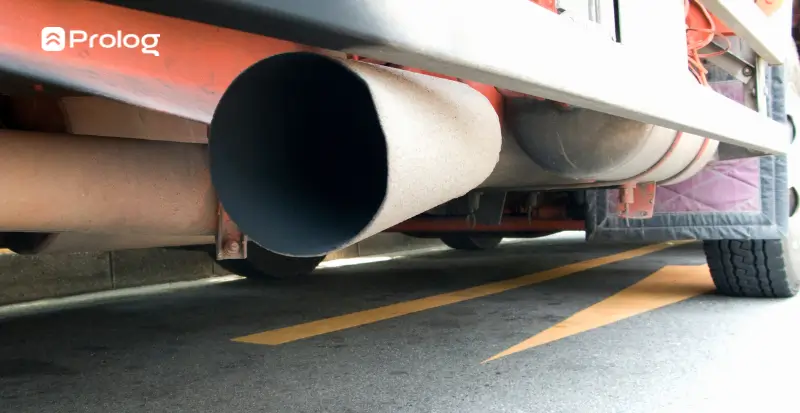
Keeping a fleet running efficiently requires constant attention to various vehicle components — and the truck exhaust system is one of them.
Although it often does not receive the attention it deserves, it greatly influences overall vehicle performance and, when neglected, can increase operating expenses, cause unexpected mechanical failures and even lead to fines for irregular emissions in Brazil.
How can you identify problems in a fleet truck's exhaust system?
Keeping trucks fully operational is essential to avoid delays, unexpected costs and mechanical problems that can compromise all logistics, right?
And one of the most critical systems for proper vehicle operation — but one that often goes unnoticed — is the exhaust system, including the aftertreatment components installed in this line to reduce emissions.
Besides carrying gases out of the engine, it helps reduce noise and influences the assembly's efficiency. However, when it fails, it can cause loss of power, increased diesel spending, excessive emissions and risks to driver safety.
If you want to avoid losses due to vehicle exhaust system problems, here are some signs to watch for:
- Abnormal noises: excessive noises such as bangs, whistling or metallic vibration may indicate leaks, loose mountings or damaged parts.
- Excessive or unusually colored smoke: black, bluish or white smoke may indicate irregular combustion, oil burning or a fault requiring diagnosis in the aftertreatment system.
- Strong smell inside the cab: a gas smell inside the vehicle may indicate a leak, posing a health risk to the driver.
- Loss of power: if the truck is weaker and responds slowly to acceleration, there may be a restriction, an engine failure or a problem with emissions control components.
- Increased fuel consumption: mechanical problems can reduce fuel economy, increase emissions and lead to more expensive repairs when left untreated.
If any of these signs appear, it is important to investigate quickly to avoid greater damage to the engine, vehicle and emissions control system.
What are the main problems in a vehicle's exhaust system?
Truck exhaust system problems can range from natural wear to failures caused by road impacts. It is therefore important to watch for the most common problems and confirm the source before replacing expensive parts:
Holes and cracks in the exhaust
Over time, the exhaust may wear from constant exposure to high temperatures, moisture and road residue. Impacts with speed bumps, potholes and debris can also cause cracks or holes in the piping.
When this happens, the vehicle becomes louder than normal and may release toxic gases in inappropriate places, posing a risk to both driver health and the environment.
Blockages and aftertreatment failures
The catalytic converter and other aftertreatment devices are installed in the exhaust system to reduce emissions. In diesel engines, particulate filters and oxidation catalysts are also part of this assembly; in SCR systems, DEF is used to reduce nitrogen oxide emissions.
Symptoms such as loss of power, increased fuel consumption, smoke from the exhaust or a dashboard warning should therefore not automatically be treated as an instruction to replace the catalytic converter. They call for technical diagnosis to identify whether the fault lies in the engine, sensors, particulate filter, DEF/SCR, mountings or another point in the exhaust system.
Faulty sensors
The exhaust system has sensors that monitor emitted gases and system conditions, sending information to the vehicle's electronic control unit. When these sensors fail or accumulate dirt, the engine may start operating inefficiently.
This can result in excessive fuel consumption, emissions above permitted limits in Brazil and even incorrect warnings on the truck's dashboard. In vehicles with DEF, system sensor faults may also affect operations, so the assessment should distinguish electrical faults, contamination, lack of fluid and mechanical wear before deciding on the correction.
Loose mountings
With constant vibration during trips, exhaust system clamps, brackets and connections may come loose.
This generally starts with a faint metallic noise, but can develop into a bigger problem if a part becomes completely detached.
When this happens, besides the mechanical risk, the vehicle may need to be stopped for emergency repairs, generating operational delays and extra costs.
How can you resolve and prevent these problems?
Now that you know how to identify and understand the main truck exhaust system problems, the next step is knowing how to resolve and, above all, prevent them. The following actions are indispensable:
Perform periodic inspections
Performing fleet vehicle inspections can help identify small exhaust leaks before they become major problems. Include this check in checklists and preventive maintenance, paying attention to noises, gas smells, smoke, mountings, sensors and aftertreatment components.
Also ask drivers to report any signs of abnormality in their vehicles, such as those mentioned above. Regular maintenance helps keep operations more efficient and prevent costly repairs in the future.
Avoid impacts and uneven roads
Whenever possible, plan routes that minimize trucks' exposure to potholed stretches. Potholes can damage the exhaust, compromise its mountings and accelerate wear on brackets, clamps and connections.
Replace worn components
Never wait for the problem to worsen, but do not treat every symptom as an immediate reason to replace a part either. If sensors, catalytic converters, filters, clamps or brackets show signs of wear, confirm the failure's cause and replace the component when diagnosis indicates this is the appropriate correction to avoid operational failures.
Invest in technology for fleet maintenance management
A maintenance management routine ensures exhaust system failures are recorded, prioritized and addressed before causing losses. And with a good system, it is possible to organize inspections, keep track of incident history, schedule preventive replacements and avoid unexpected costs.
Rest assured, we know fleet managers' days are busy and keeping track of every detail can be challenging. With that in mind, we developed solutions focused on fleet maintenance management.
See in a free demonstration how Prolog can help your fleet avoid mechanical failures and reduce maintenance costs!
Frequently asked questions
The truck is using more diesel and losing power; could it be the exhaust?
Is black smoke from the exhaust a sign of a problem?
I smell gases inside the cab; is that serious?
How can I prevent the exhaust problem from happening again?
What is the difference between an exhaust hole, a clogged catalytic converter and a faulty sensor?
// newsletter
Fleet management content, straight to your inbox
Articles on tires, maintenance and fleet operations. No spam.
Read also
 Fleet maintenance management

 Fleet maintenance management

Automatic truck: signs of transmission failure
See the signs of automatic transmission failure in trucks, fluid care tips and when to take the truck to the shop for a specialized diagnosis.
Image: Ford Caminhões
Jean Zart