Truck tire renewal: is reconditioning worth it?
 Luiz Felipe 7 min read
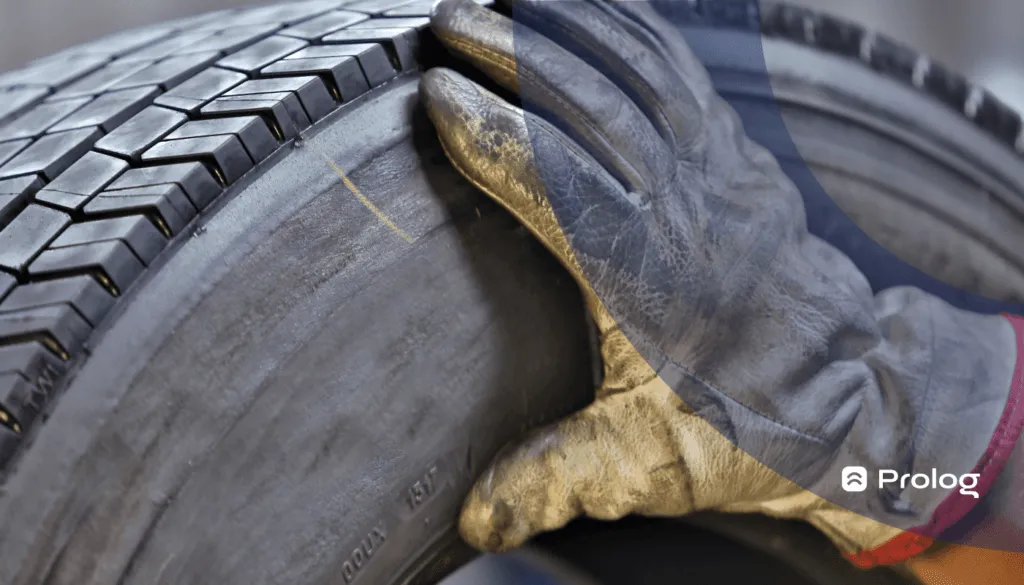
Truck tire reconditioning is an alternative for extending the use of the casing, reducing waste and better controlling the fleet's cost per kilometer. When the tire is fit for the service, it goes through a technical reuse process and goes back on the road with new rubber, without the company needing to buy a new one right away.
We know that tire costs for heavy vehicles weigh on the budget. On top of that comes the wear caused by roads in poor condition, rain, sun, uphill and downhill stretches and the variety of terrain in different regions of Brazil, factors that increase the operation's spending over time.
That is why driving on our country's highways is a hard task that requires care, especially when it comes to tires. After all, worn tires increase the risk of accidents, destabilize the vehicle and impair braking, in addition to undermining cost predictability.
You need to identify the right time to take the tires off the vehicle and what to do with them. You probably have plenty of questions about reconditioning your fleet's truck tires, right?
We have gathered some of the main ones and answered them for you:
1. What are the methods for truck tire reconditioning?
There are three techniques for reconditioning a tire: tread-only retreading, top-and-shoulder retreading and remolding. Under Inmetro's definition (Inmetro is Brazil's National Institute of Metrology), a reconditioned tire is a used tire that has gone through tread-only retreading, top-and-shoulder retreading or remolding so that the casing can be reused. The best technique for each vehicle should be decided according to the condition of the tire.
Tread-only retreaded tire
In this technique, only the rubber of the tread that is in contact with the ground is replaced. And there are two ways to do it: hot and cold.
In hot retreading, camelback is used, a type of tread that is incorporated into the tire in a vulcanization process at up to 150 °C.
In cold retreading, on the other hand, the maximum temperature is 115 °C and the tread is precured, that is, it comes ready to be applied to the tire casing.
Tire retreading is the most common way to extend the use of tires and brings better results for the fleet in the long term, economically speaking. Since the number of retreads directly influences the CPK, the procedure needs to be planned together with the purchase, the repairs and the other services performed on the tire.
Want to improve your fleet's tire management? Talk to a Prolog specialist
Top-and-shoulder retreaded tire
Here the tread rubber is replaced with camelback, and the shoulders of the casing are also covered. Under Inmetro's definition, top-and-shoulder retreading replaces the tread and the shoulders of the tire.
The tire is then taken to a mold heated to a temperature of 150 °C, where its pattern is formed, leaving it ready for use.
This truck tire reconditioning process is used for tires that have suffered some type of irregular wear on the shoulders — a need for rubber replacement that tread-only retreading cannot meet.
Remolded tire
When a tire is remolded, its entire outer part is covered with a new layer of rubber. Inmetro describes remolding as the replacement of the tread, the shoulders and the entire surface of the sidewalls.
It is usually the least used truck tire reconditioning process, since it involves replacing the entire tread and the sidewalls. This technique is also carried out through a hot “remold” process, at up to 150 °C.
A reminder:
The sooner you take the tire in for a reconditioning evaluation, the greater the chances that everything will go well and that you will not need to buy a new one. Pay attention to the tire's tread, pressure, alignment, rotation and visible damage; these points are part of ongoing maintenance and help identify irregular wear before the casing is compromised.
2. When should each type of reconditioning be used?
To determine the ideal type of reconditioning for your case, a technical analysis is essential. In fact, for this type of study, the tire manager and the fleet analyst should work together to check the fleet's tire data and use it as the basis for their decisions.
We can say up front that it is important for the level of fatigue and the extent of damage to be low. The beads, sidewalls, shoulders and belt packages need to be well preserved. It is also worth checking whether the service supplier complies with the applicable rules: in Brazil, tire reconditioning has mandatory requirements, undergoes conformity assessment, and service suppliers in the country must be registered with Inmetro.
3. Which truck tire reconditioning is most worthwhile?
As mentioned above, the tire retreading process tends to be the most advantageous type of reconditioning when the wear is concentrated on the tread and the casing remains in good condition.
This is because it replaces the tread through a detailed procedure and makes it possible to reuse the casing. The tire is fit to return to the operation when the technical evaluation and the reconditioning service are well executed.
Another advantage is that all of the manufacturer's original information is kept, while the reconditioned tire must carry the identification of the reconditioning process and the corresponding marking required by the regulations.
However, it is not uncommon to see retreading refused when the tire exceeds a wear limit, damaging the casing, and can no longer receive a new tread.
4. How much does it cost to retread a truck tire?
The cost of reconditioning a truck tire varies according to the condition of the casing, the type of reconditioning, the tire size, the region, the chosen retreader and the repairs needed before the new rubber is applied. That is why the most reliable comparison is not to look only at the price of the service in isolation, but to calculate the impact on the cost per kilometer.
In practice, the CPK considers the tire's purchase price plus repairs and retreading services. Since the number of retreads directly influences this indicator, keeping track of each tire helps you understand whether reconditioning is really delivering savings and good results for the fleet.
5. How many times can a tire be reconditioned?
With a casing in good condition, a heavy vehicle tire can be reconditioned more than once, but there is a limit to the number of retreads it can safely withstand. It is worth remembering that paying attention to tread depth helps increase the chance of retreading, since it preserves the base of the tire.
In Brazil, traffic legislation considers a tire irregular when its remaining tread depth is less than 1.6 mm. This depth can be checked visually by means of wear indicators, which are raised bars at the bottom of the tread grooves. For fleet management, the ideal is not to wait for the legal limit to arrive: the sooner the tire is evaluated, the greater the chance of preserving the casing.
6. How long does a retreaded truck tire last?
The lifespan of a retreaded tire depends on the quality of the casing, the type of operation, the condition of the highways, the load carried, calibration, alignment, rotation and damage inspection. In good conditions, reconditioning can return the tire to the fleet's cycle of use with performance compatible with the planned operation.
A tire's performance takes many variables into account, such as the condition of the highways, maintenance care and the type of load it carries. For this reason, it is important to have tire management in the fleet.
With this type of control, it becomes much easier to collect data, store information and carry out routine maintenance that will help your company's savings and safety. Incorrect pressure, for example, causes uneven wear, reduces the tire's useful life and increases the CPK; that is why pressure, tread depth, rotation and alignment should be on maintenance's radar.
7. How do you know when to send a tire for reconditioning?
The only way to get this answer is by keeping track of the performance of your fleet's tires.
You absolutely need to know the tread depth over time and to have visibility into tire pressure control. These are two of the main indications that the tire may be suffering irregular wear, along with cuts, bulges, visible damage, misalignment and other conditions that require professional evaluation.
Whether through notes, spreadsheets or technology systems, you need to have some control over these assets of your operation in order to achieve the much-desired cost reduction. Keeping track of tread depth helps determine the right time for retreading or replacement, and any worrying condition identified during inspection should be referred to a tire professional.
To do so, download the free tire control spreadsheet (in Portuguese) that we prepared and manage your fleet more precisely and safely.
Frequently asked questions
How much does it cost to recondition a truck tire?
What is the difference between a tread-only retreaded tire, a top-and-shoulder retreaded tire and a remolded tire?
How many times can the same tire be retreaded?
Does a retreaded tire last less than a new one?
How do you know it is time to send the tire for reconditioning?
When is retreading not the best option?
// newsletter
Fleet management content, straight to your inbox
Articles on tires, maintenance and fleet operations. No spam.