How to extend a vehicle's useful life
 Jade Zart 6 min read
In a transport company, a vehicle's useful life is very important: if a truck is compromised, all delivery-related procedures are too.
As a vehicle travels, its parts wear. That is why the checklist routine is so important, always checking which corrections are needed to keep the truck in good operating condition.
From there, the fleet manager's role is to analyze completed checklists and make plans to stay within the planned budget for the operation's maintenance department.
In this post, learn about the factors influencing a vehicle's useful life and the steps to ensure greater durability:
Want to see this in your fleet? Talk to a Prolog specialist
What is a vehicle's useful life?
Average useful life differs for light, medium-heavy and heavy vehicles. It also changes according to application, transported load, route type, road conditions, driving style and maintenance discipline.
So, instead of treating a fixed number of years as a rule for cars, motorcycles, trucks or buses, the safest approach is to keep track of each asset's history. A vehicle used in severe operations, with overloading or overdue maintenance, tends to age faster than one used on more predictable routes with regular inspections.
Naturally, as soon as a vehicle starts being used, it also starts feeling the impacts of the roads and trips made. Many kilometers are covered, and the way the driver drives can also lead to a loss of road performance.
This is where the maintenance manager's work comes in, if the company has someone in that role: investigating each component of the vehicle checklist and deciding which solutions to apply.
For example, the manager may decide to increase the frequency of preventive maintenance checklists and even maintenance services themselves, or may provide driver training for more economical and safer driving.
This is only possible through advance financial budget planning for the transport company. Otherwise, the bill at the end of the month may exceed estimated amounts and contribute to delays in other processes.
Watch the video for some tips:
(video in Portuguese)
What are the steps to extend a vehicle's useful life?
Carry out preventive maintenance
Preventive maintenance is the first step to extend a fleet vehicle's useful life. Without it, route safety risks increase, and the truck may suffer mechanical failures on the road and cause accidents.
It also represents a risk to operating finances, since corrective maintenance costs more than preventive services.
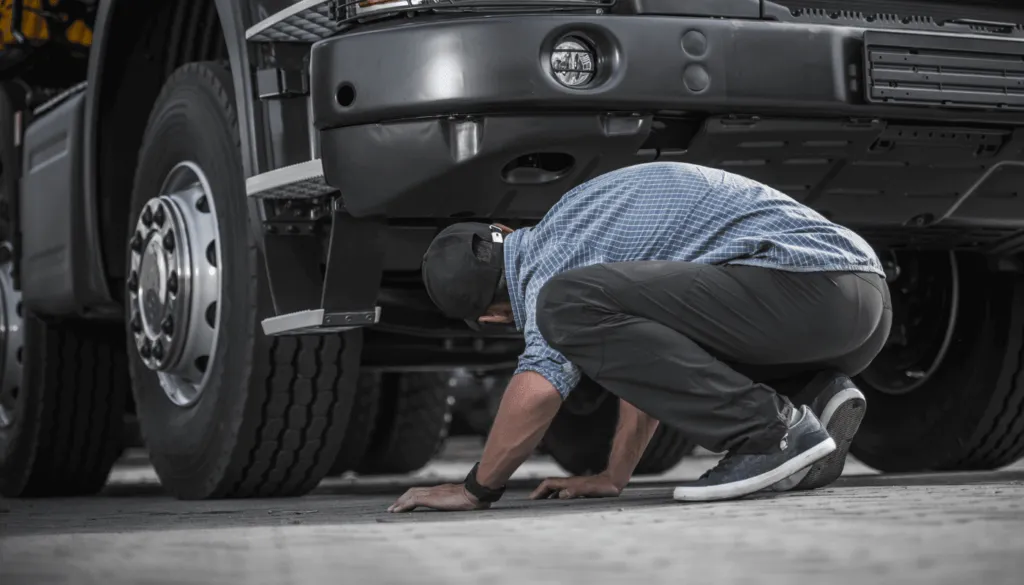
To avoid these issues, you need to regularly inspect items such as suspension, air filters, signaling lights, brakes and the engine. These are among many other components essential to vehicle operation.
The logic of preventive maintenance is to work with schedules and asset history, with inspections, lubrication and parts replacement in a regular routine. In Brazil, a vehicle may also only travel when it meets the safety requirements and conditions established by the Brazilian Traffic Code and the rules of CONTRAN, Brazil's National Traffic Council.
Different checklist models and maintenance indicators can help you determine a good preventive routine in the fleet.
Train drivers
In freight transport, driver performance determines not only quality but also operational productivity. Well-prepared drivers bring greater returns to the transport company, such as:
- Fuel savings;
- Reduced maintenance costs;
- Fewer accidents and cases of damage.
Training should focus on the main issues found in operating routines.
For example, if you notice fuel consumption is very high, work to raise driver awareness about speeding and the importance of reporting vehicle issues, because this communication affects operating savings.
Care for tires
Tires are fundamental to preserving the vehicle. This means that when worn or incorrectly inflated, they create issues for the whole truck. They therefore need very careful attention.
Correctly inflated tires are safer, last longer and can improve fuel consumption by an average of 0.6%, reaching 3% in some cases. Incorrect pressure, on the other hand, can increase premature tire wear and fuel consumption above normal levels.
For this, you should:
- Check that tires are at the recommended pressure, including maintaining a monthly checking routine;
- Check that the wheels are aligned;
- Define tire rotation according to the manual, application type and wear pattern observed in the fleet;
- Check tire wear levels;
- Assess the need for asset replacement and retreading.
Keep the vehicle clean
It may seem to be just a matter of appearance, but cleaning directly contributes to fleet preservation. Some dirt causes paint corrosion, leaving bodywork exposed to rust and other damage.
It is therefore important to establish a cleaning routine, whether weekly or every two weeks, to ensure better upkeep and extend a vehicle's useful life.
Use quality products and parts in preventive and corrective services
Fleet management should prioritize purchasing original items capable of maintaining and even improving the transport company's operational productivity.
Cheaper parts may be incompatible with the vehicle and compromise other truck components, and often lack a replacement warranty. This ends up generating costs that could have been avoided from the start.
Also, for the necessary repairs and maintenance, nothing is better than a qualified mechanic.
Pay attention to each truck's maximum load capacity
Besides the tips mentioned so far, avoiding overloading is essential for better fleet control. In Brazil, the Brazilian Traffic Code stipulates that only vehicles whose weight and dimensions meet the limits established by CONTRAN may travel on land routes. See the main reasons for respecting this capacity:
- Traffic fines: Drivers risk being fined if caught driving with a load exceeding what the law allows.
- Loss of handling: Excess weight causes vehicle instability and also strains the brakes.
- Increased tire wear: Especially when weight is poorly distributed, tires may wear faster. And, as discussed above, worn tires affect the truck's operation as a whole.
- Higher fuel consumption: With a heavier vehicle, the engine works harder to move it and reach the desired speed. In other words, it burns more fuel in the process.
Basically, overloading increases the impact of every effort the truck already makes, which naturally wears its components. This can reduce its useful life over time, especially when overloading recurs in daily operations.
Suitable fuel for each vehicle
Low-quality or adulterated fuel can cause engine issues and make the vehicle lose power. This, in turn, reduces its durability.
Although there is no guaranteed way to identify bad fuels, some measures that help avoid loss of engine quality and performance are refueling at reputable stations and being wary of very low prices.
Choose the best digital checklist system
There are many generic platforms, and this can create more issues than it actually helps solve. To extend a vehicle's useful life, it is important to use inspection checklists.
For this, prefer the digital model and look for solutions already designed for fleet management. This gives you a more dedicated system adapted to your needs, which is also easier to customize for the vehicles you have.
We invite you to discover Prolog's solution, which has this focus and offers various features for better fleet control. When noncompliance is indicated on the checklist, Work Orders can be generated automatically; in maintenance management, it is also possible to record and control costs, use plans by vehicle type and keep track of automatically updated reports and charts.
Frequently asked questions
What is the average useful life of a fleet vehicle?
How does preventive maintenance increase a vehicle's useful life?
Why does overloading reduce a truck's useful life?
How does tire care affect vehicle durability?
Does low-quality fuel harm vehicle useful life?
// newsletter
Fleet management content, straight to your inbox
Articles on tires, maintenance and fleet operations. No spam.