
Vehicle checklist model: how to build one for your fleet
 Luiz Felipe 6 min read

A vehicle checklist, also known as an “inspection list”, brings together everything that needs to be analyzed on a vehicle before it leaves on a route.
It is also an essential fleet preventive maintenance tool, and can have several different models suited to different inspection situations. For example, for a short daily route, a quick checklist with the main items is sufficient.
However, for a larger operation requiring longer-distance travel, other vehicle components need investigation — often requiring inspection of hard-to-access parts of the truck.
This means the checklist is more comprehensive and takes longer to complete. In fact, some of the main questions include which type to use, which checklist models are best and which items are essential to ensure a vehicle works perfectly.
So, see below:
- What a vehicle checklist is;
- Why use it;
- Which checklist models exist;
- How to build a vehicle checklist;
- What must be included in the fleet's vehicle checklist;
- Whether a checklist helps increase vehicle longevity;
- Why automate the vehicle checklist.
Want to see this in your fleet? Talk to a Prolog specialist
What is a vehicle checklist?
It is a tool used to check vehicle availability for the operation's routes. A vehicle checklist can include items ranging from headlights to cleaning air-conditioning filters.
The number of items and inspection detail depend solely on the inspection's objective.
When it is only a daily route assessment, the items are basic; when the vehicle is being prepared for a long-distance and/or multiday trip, the analysis is more detailed and in-depth.
Why use a vehicle checklist?
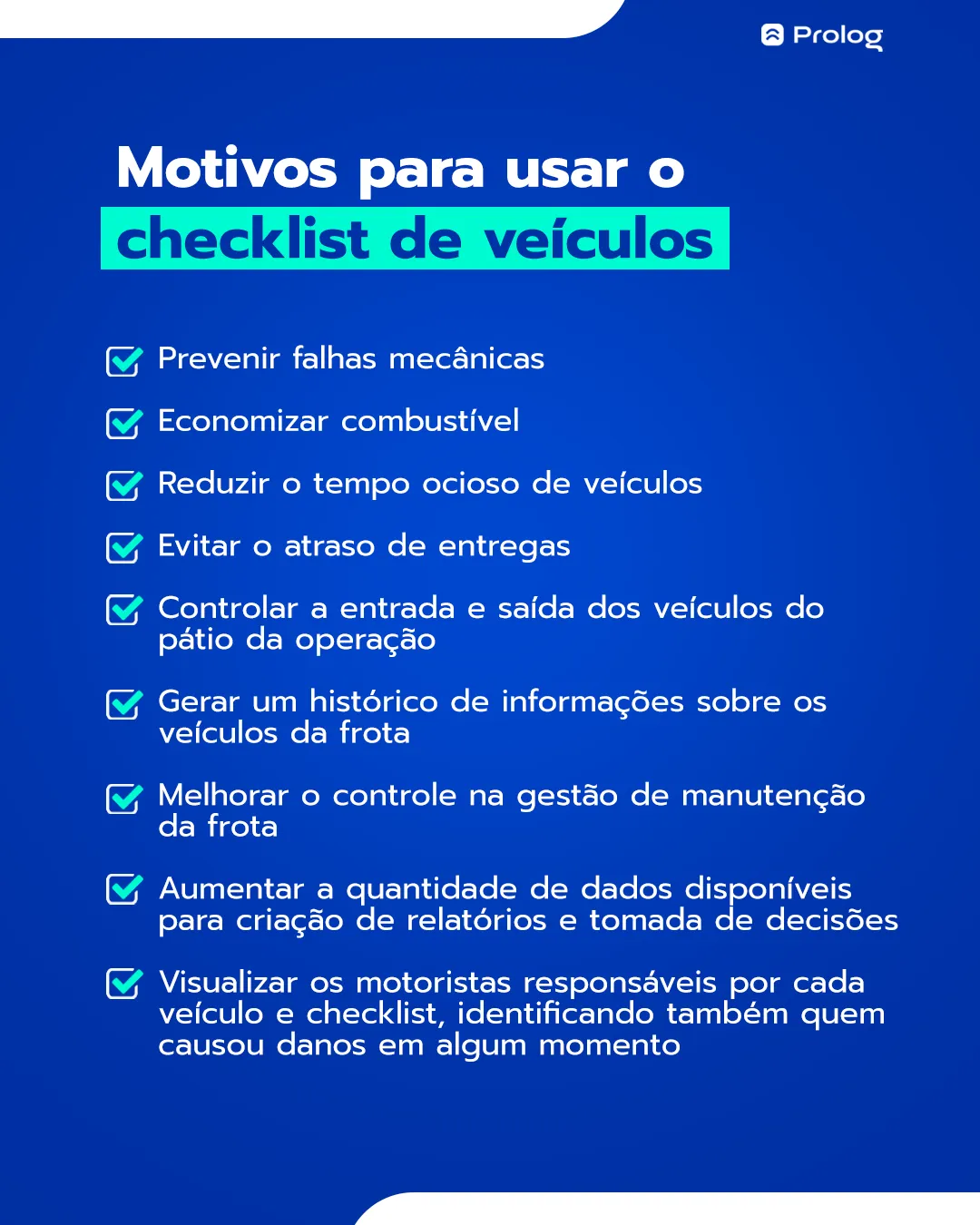
Reasons to use a vehicle checklist in the fleet.
Preventing mechanical failures, saving fuel, reducing vehicle idle time and much more. All this is possible with a simple procedure: using a vehicle checklist.
By avoiding failures, you also prevent delays and ensure the trip is as safe as possible.
Other benefits showing the need for a checklist in your fleet are:
- Controlling vehicle entry to and exit from the operation's yard;
- Building an information history for the fleet's vehicles;
- Improving control in fleet maintenance management;
- Increasing the amount of data available for reports and decision-making;
- Seeing the drivers responsible for each vehicle and checklist, also identifying who caused damage at any point.
Which checklist models exist?
Spreadsheets
Although spreadsheets can work as a way to create checklists, they are more commonly used to control data collected during inspection. Managers using them therefore tend to combine a control spreadsheet with a paper checklist.
This way, drivers complete the papers and hand them to the manager, who fills in the spreadsheet using the recorded information.
Paper
A paper checklist is a good tool for those performing small-fleet maintenance, with around 10 vehicles. These models are usually created on a computer using programs such as Word and printed on paper.
The driver then receives the papers on a clipboard and must write everything down with a pen.
As the number of vehicles increases, focusing on modern solutions becomes more necessary, making the process automated and digital.
This is because papers can be easily lost, notes become confusing and a driver's handwriting may be difficult to understand, making important information harder to interpret.
Papers also get very dirty as drivers touch vehicle components and return to write down what they found.
Digital
A digital checklist is a more modern tool that serves medium to large fleets very well. It provides a more practical way both to create vehicle checklist models and to organize information collected during inspection.
A digital system also allows many functions to be automated, such as report creation.
In this case, you can either acquire a checklist with ready-made, customizable models or create your own based on your fleet's vehicles.
How do you build a vehicle checklist?
If you do not yet have a model for your operation, you can start by listing the fleet's vehicles and their main characteristics. This gives you a starting point for building your fleet inspection.
Your vehicle checklist is then created in three steps:
1 – Define the checklist's objective
To create your model, define the checklist's objective: is it a daily check or for a long trip?
This makes a difference when listing the items to check. For example, although engine oil does not need changing every day, it needs checking frequently to ensure there are no leaks or to identify any issue in advance.
2 – Identify the vehicle, date and driver
Next, you need to identify the vehicles.
In other words, the checklist must show the truck's license plate and inspection date right at the start. Also include the necessary spaces to record current mileage, trip departure and return dates and the responsible driver.
Speaking of drivers, this initial checklist stage must also include checking the validity of vehicle and driver documents.
3 – List the items needed in each checklist
Before starting, you already listed all vehicle models in your fleet, right?
After defining each checklist's objective, you can organize and arrange parts and components in the way that makes most sense for your operation.
To understand even better, see these checklist models:
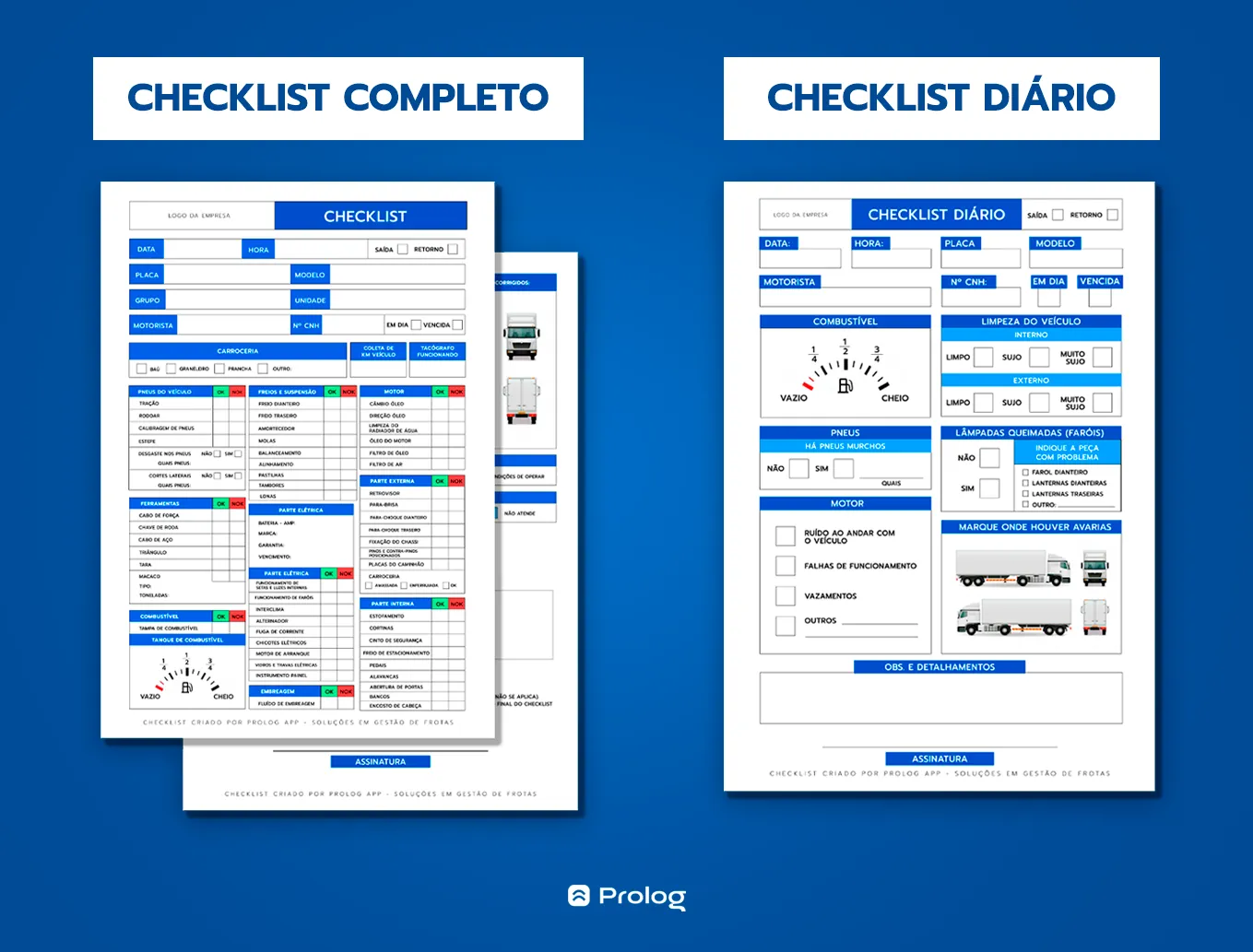
Checklist models to use in your fleet.
What must a vehicle checklist include?
Consider all the vehicle's systems and components:
- Electrical
- Mechanical
- Lubrication
- Filters
- Brakes
- Tires
- Fuel
- Belts
- Glass
- Suspension
- Ignition leads and spark plugs
- Belts
- Radiator water
Also, their subitems, such as:
- checking turn signal operation;
- hazard lights;
- headlights;
- interior lights;
- brakes and parking brake;
- mirror adjustment;
- tire condition and calibration;
- body condition;
- oil level;
- starter motor operation;
- air-conditioning operation;
- cleaning air, fuel and engine oil filters;
- water pump;
- thermostat;
- cooling fan;
- suspension bushings;
- springs and ball joints.
Does a checklist help increase vehicle longevity?
As a fleet preventive maintenance tool, this is one of its objectives. Fleet vehicles undergoing regular inspections can have their useful life extended.
To use your vehicle checklist as effectively as possible, first ensure drivers are using it according to the planned schedule. After all, it only works if applied to the operational routine.
It is therefore also essential to instruct drivers and other employees on adopted practices, schedules, routines, checklist completion and so on. Everyone should know the importance of this work and the standards to follow.
As you introduce new checklists, keep a close eye on their use until everyone gets the hang of them and the process is truly efficient.
Another action you can take to improve vehicle longevity and performance is to provide drivers with a toolkit for minor repairs on their routes.
This way, if necessary, you prevent vehicle downtime or higher costs from an emergency workshop visit. In these situations, the completed checklist must include the adjustment made.
Always keeping a history of issues and solutions to consult when making new decisions benefits your fleet management as a whole.
Why automate the vehicle checklist?
It is the best way to collect and store real, standardized data. A digital checklist creates a more productive routine, reducing fleet inspection time and automatically updating reports after each checklist.
All employees stay informed at all times about vehicle status: which need further servicing, which are available for use and which have critical items preventing them from leaving on a new route.
Taking advantage of technology's benefits is always a smart choice.
Even more so with the Prolog solution, which gives you a complete and very practical system. Checklist models are fully customizable and issues found in inspections are reported in real time.
Learn more about our system in a free demonstration with one of our specialists — book a time slot.
Frequently asked questions
What is a vehicle checklist for in a fleet?
How do you build a vehicle checklist from scratch?
What must be included in the item list?
Do paper checklists still work?
Does a checklist increase vehicle longevity?
Why automate the vehicle checklist?
// newsletter
Fleet management content, straight to your inbox
Articles on tires, maintenance and fleet operations. No spam.


