Tire grooves: roles, measurement and legal limit in Brazil
 Luiz Felipe 5 min read
A tire is made up of many different parts, including grooves. Have you ever wondered what tire grooves are for? That is what we will look at today.
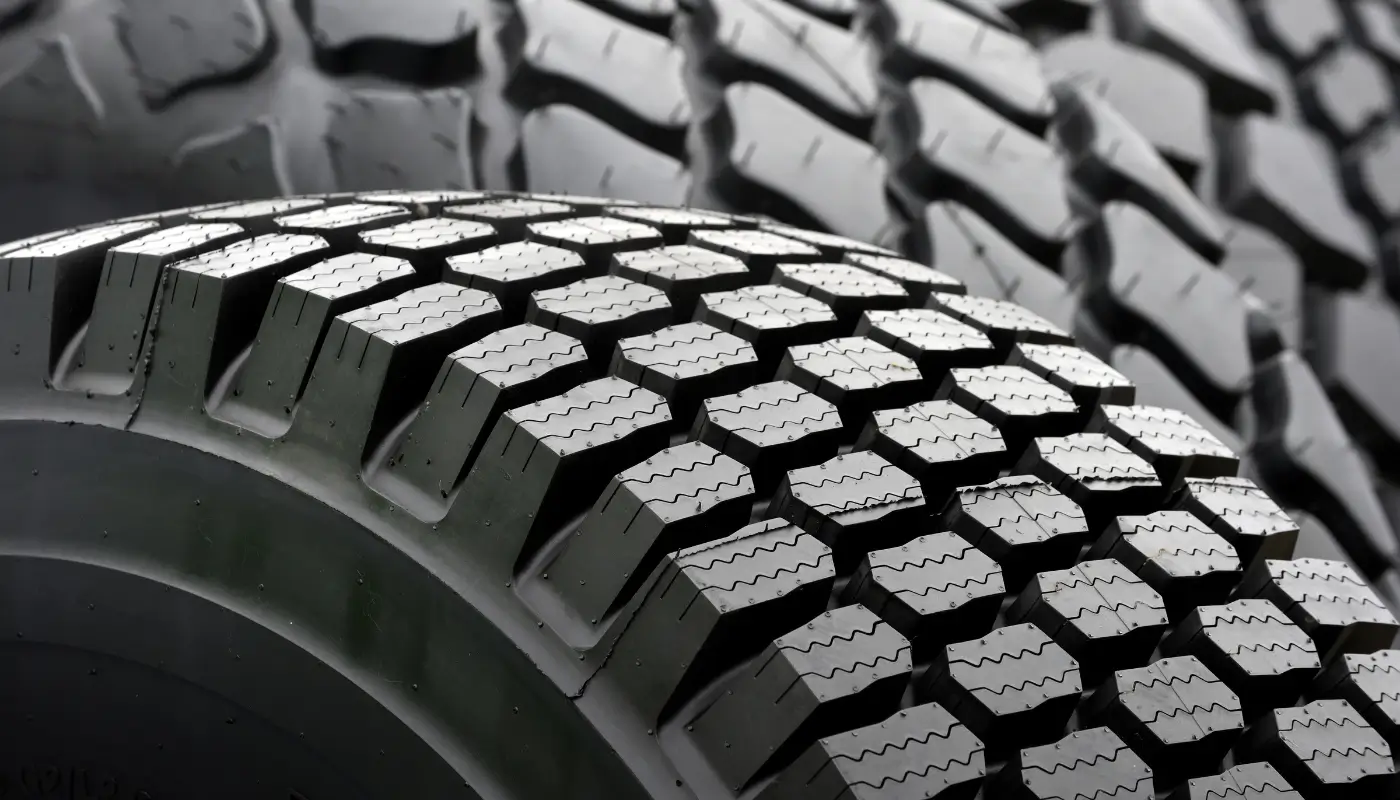
Much more than simply giving vehicle tires a pattern, grooves are the continuous central “lines” that form a design on the tire. They mainly allow air and, on rainy days, water to pass through.
They help vehicle performance, increasing safety for the driver and passengers, preventing accidents, improving tire resistance and handling, and providing many other benefits.
To learn how to take better care of your fleet's tires, you first need an answer to this question:
What are tire grooves for?
Grooves have some primary functions, such as draining water, generating road grip and cooling tires.
For example, on very rainy days, water forms a layer on the surface and ends up between the tire and asphalt, creating what we know as hydroplaning. This makes the truck unstable, affecting the braking and steering systems and increasing accident risks.
That is when grooves come into action!
In this case, they drain water passing through the tire channels, moving it away through the natural motion of the wheels.
Another important function is helping air flow, which ensures better road grip and safe braking. They also prevent sliding, help control tire temperature and reduce noise.
Want to improve your fleet's tire management? Talk to a Prolog specialist
What else do you need to know about grooves?
Besides understanding what tire grooves are for, it is worth emphasizing that each tire can have 2 to 5 grooves. Fewer or more channels may be found in specific situations, but truck and bus tires generally have 3 or 4 grooves.
Their position, width and depth also vary, all depending on the size of the tire tread.
An important point is that grooves have a minimum depth used to measure tire wear, also indicating when it is time to retread or replace the item.
How do you collect groove information?
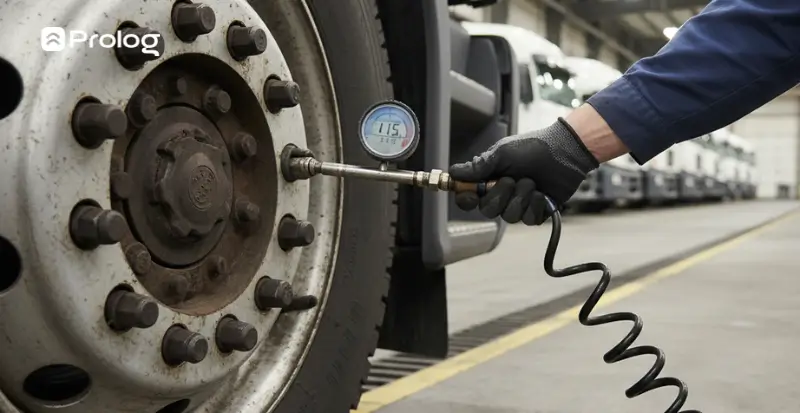
Whatever method you choose, you must collect data by measuring tread depth. Tires today are already manufactured with the TWI, the tire wear indicator, so you can read it to understand the tire's wear level. However, there are also different tools, both manual and digital, to perform this task more accurately and practically.
To know whether your vehicle's tires are fit for the road and the grooves are performing their functions properly, you must measure tread depth according to a measurement schedule.
The safest way to measure is with an electronic tread measuring device, also known as a tread probe or tread depth caliper. It is a device for measuring tire tread depth that, when inserted into the groove, takes a reading and displays on a small screen how many millimeters of tread depth the tire has.
A popular way to measure in Brazil is with a 1 real coin. According to claims circulating in the media and even among drivers, the coin's gold ring measures exactly 1.6 mm. In other words, when placed in the groove, the tread must extend beyond the gold part of the coin for the tire to be fit for use. Otherwise, it needs to be replaced.
However, this method is neither safe nor recommended, since it is a makeshift and unreliable way to obtain an exact answer. Always choose the TWI indicator or a professional electronic tread probe.
Why is it important to know what tire grooves are for and keep track of their data?
Failing to analyze and care for tire wear through groove measurements can create not only risks for the vehicle and driver but also extra fleet costs.
After all, in Brazil, minimum tread depth is established by Article 4 of Resolution 558/80 of CONTRAN (Brazil's National Traffic Council) and must be followed strictly. Noncompliance means the tire is considered “bald” and results in 5 points on the Brazilian driver's license plus a fine for each tire with excessive groove wear.
As a reminder:
In Brazil, tire tread depth cannot be less than 1.6 millimeters. If the tread reaches this marking, it indicates that the tire has reached its running limit and, in fact, retreading is very likely to be refused, requiring immediate tire disposal.
Therefore, set a limit for your transport operations at which you can still send tires for retreading and increase tire life by a few years.
Bonus: discover 7 tasks to prevent tire wear
While you need to know what tire grooves are for and how to measure them, you also need to know what to do to prevent accelerated or uneven tire wear. That is why we have brought together some of the main tasks needed to improve their performance and durability:
- Inflate tires weekly: this prevents overheating, reduces fuel consumption, increases stability on curves and makes steering lighter.
- Rotate tires every 8,000 km on average, increasing tire durability and steering stability.
- Do not exceed the maximum load specified by your vehicle manufacturer: this will prevent accelerated wear.
- Perform preventive maintenance on parts connected to the tires, such as shock absorbers, springs, brakes, bearings and axles, increasing their durability.
- Balance tires every 10,000 km on average, avoiding loss of traction, wear and driving discomfort.
- Avoid harsh braking and sharp changes in direction, reducing the chances of tires wearing unevenly.
- And, of course, check the tread wear indicator periodically, measuring tread depth and maintaining safety behind the wheel.
Although there are several tasks, your routine does not need to become that much busier. With a tire management solution, each measurement takes just 1 minute and all the data from it is sent instantly to the control system as soon as it is recorded.
What is more, you get automated reports and a tire inspection schedule ready to use in your fleet. Discover all the benefits of this tool and get your questions answered by scheduling a free demonstration with one of our specialists.
Frequently asked questions
What are tire grooves for?
How many grooves does a tire have?
How do you measure tire tread depth?
Can driving with worn grooves result in a fine?
What can you do to prevent accelerated groove wear?
// newsletter
Fleet management content, straight to your inbox
Articles on tires, maintenance and fleet operations. No spam.