Fleet checklist: types, items and how to implement it
 Luiz Felipe 9 min read

Keeping the vehicles in transport operations in ideal running condition is a challenge that the fleet checklist has been helping to tackle.
This tool works as a guide for vehicle inspection, helping to identify and solve maintenance problems before they become critical. It also brings very important benefits for the fleet: from improved safety to lower operating costs.
Here is what you will find:
- What a fleet checklist is
- What the uses of a fleet checklist are
- Is this the best method for your company
- The importance and benefits of the fleet checklist
- Fleet checklist types for vehicle inspection
- What a fleet checklist should include
- How to implement a fleet checklist
- Free checklist templates to start using
What is a fleet checklist?
A fleet checklist is a tool used to check and inspect the vehicles in a fleet regularly and in detail. It consists of a list of items that need to be checked at each inspection, ensuring that the vehicle's main components are assessed.
This can range from daily checks, with higher-priority items, to more complete checklists for thorough inspections every 6 months, for example.
The main goal of the checklist is to ensure that vehicles are always in good operating condition, preventing mechanical failures and ensuring the safety of both drivers and the cargo being transported.
The templates used can vary according to the vehicle type and the nature of the operation, but they generally include items such as checking tires, brakes, lighting and oil level, among others.
What are the uses of a fleet checklist?
A fleet checklist can be used for various purposes, such as:
- Daily inspections: carrying out daily checks to ensure that vehicles are in safe running condition before they leave for operations.
- Preventive maintenance: scheduling maintenance based on inspections to avoid more serious mechanical problems or problems during routes.
- Keeping track of compliance: ensuring that all vehicles comply with traffic laws, especially the safety regulations that apply to the operation.
- Maintenance history: keeping a detailed record of the inspections and maintenance carried out, so they can be kept track of and audited.
- Vehicle performance analysis: collecting data from inspections to analyze vehicle condition and identify patterns or recurring problems.
Is this the best method for your company?
Using a checklist will only benefit the company if it is implemented and adhered to correctly. When it is put to good use, the results it generates can become indispensable.
To better understand whether a fleet checklist is a good inspection method for your company, it is important to consider a few different factors.
To begin with, the size of the fleet. The larger the number of vehicles, the more advantageous it is to use a structured checklist to ensure that all of them are inspected regularly and in an organized way.
Another important factor is the type of operation, since companies with more complex operations that require high levels of safety benefit greatly from using checklists. This is because it becomes easier to keep records and look them up when needed.
The availability of resources, such as electronic systems and employee training, also influences how effective checklists are. This method will only deliver really good results if you manage to implement the most suitable tools and processes.
Finally, if your fleet has been facing frequent maintenance problems or mechanical failures, implementing a checklist can help improve the situation.
The importance and benefits of the fleet checklist
Using a checklist in fleet management is fundamental to ensuring the safety, efficiency and economy of transport operations.
By adopting a checklist, companies can systematize and standardize vehicle inspection. This allows the process to be carried out more consistently and the maintenance activities and inspections to be recorded in a more organized way, reducing reliance on loose notes or checks with no history.
This brings several advantages for the company, and the main benefits of a fleet checklist include:
- Improved safety;
- Lower costs;
- Greater efficiency;
- Compliance with applicable regulations;
- Better data management.
Fleet checklist types for vehicle inspection
The checklist types used can be defined either by frequency (daily, weekly, etc.) or by the purpose of the inspection, such as the preventive maintenance checklist, the safety items check, and so on.
The main types include:
Daily pre-trip checklist
The goal of this type of checklist is to ensure that vehicles are in safe operating condition before they head out on the road.
The items most commonly checked at this point are: tires, headlights, brake lights, oil level, brake fluid, fuel and the general condition of the vehicle.
It is excellent for quickly identifying problems that can be solved before they affect the operation.
Weekly checklist
In this case, the goal is to carry out a more detailed and comprehensive inspection, complementing the daily checklist.
In it, you can include all the items from the daily checklist and also add tasks such as: checking tire pressure, the condition of the wiper blades, transmission fluid, and a visual inspection for possible leaks.
Detecting problems that are not evident in daily inspections and that can worsen over time is fundamental to reducing costs and improving quality in transport.
Monthly checklist
With the monthly inspection list, you will carry out a complete and detailed review of the vehicle, ensuring that all systems are working correctly.
In other words, it will include all the items from the daily and weekly checklists, as well as checking the exhaust system, tire alignment and balancing, the condition of belts and hoses, and the cleanliness of the air and fuel filters.
The main benefit this checklist offers is the prevention of serious mechanical failures and ensured compliance with safety and maintenance standards.
Preventive maintenance checklist
With the preventive maintenance checklist, you can plan and carry out preventive actions to avoid mechanical failures and extend the useful life of vehicles.
Checking all of the vehicle's systems, including the engine, transmission, brake system, suspension and electrical system, is the basis of this inspection, which promotes lower emergency repair costs and greater vehicle reliability.
Post-trip checklist
Besides assessing the vehicle before a route, it is equally important to inspect it after it returns.
The items will be practically the same as in the departure check, checking the general condition of the vehicle, the presence of damage or defects, fuel and fluid levels, and tire condition.
It mainly helps identify damage that occurred during the trip and plan repairs before the next operation.
What should a fleet checklist include?
A fleet checklist can come in a variety of templates depending on the vehicle type being inspected. You can have checklists for box trucks, tractor units, forklifts, tires, and so on.
There are many templates that can cover different stages and goals of your fleet. That is why it is important to map the vehicles' needs before creating the checklists, so you can make an accurate survey of everything that needs to be included in your checklist template.
Even so, here are the essential components that should be included in a fleet checklist, adjusting the list to the vehicle type, the operation and the applicable requirements:
Vehicle identification
- Vehicle identification number (VIN)
- Vehicle license plate
- Vehicle model and year
General condition of the vehicle
- Visual inspection of the vehicle's exterior (dents, scratches, structural damage)
- Check of exterior and interior cleanliness
Tires and wheels
- Tire pressure check
- Tire tread depth measurement
- Visual inspection of tread wear
- Check for damage or cuts on the tires
- Check of wheel alignment and balancing
Lighting system
- Check of headlights (high and low beam)
- Check of tail lights and brake lights
- Check of turn signals and blinkers
- Inspection of reverse lights and license plate lights
Fluids and levels
- Engine oil level
- Brake fluid level
- Transmission fluid level
- Power steering fluid level
- Coolant level
- Windshield washer fluid level
Brake system
- Check that the brakes are working
- Inspection of discs and brake pads
- Check of the brake fluid level
Electrical system
- Check of the battery and terminals
- Test that the instrument panel is working
- Check for loose or damaged connectors and wires
Safety equipment
- Check of seat belts
- Inspection of airbags
- Check of fire extinguishers
- Inspection of the warning triangle and other items required or defined by the operation's policy
Documentation
- Check that the insurance is valid
- Check of the vehicle's licensing
- Check of the driver's license
- Inspection of records of previous maintenance and inspections
Specific cargo conditions (where applicable)
- Check of the condition and securing of the cargo
- Inspection of refrigeration systems (for perishable cargo)
- Check of cargo safety devices (such as straps and nets)
How do you implement a fleet checklist?
Implementing a fleet checklist is a process that requires planning and dedication to ensure that all aspects of the operation are covered. The steps you need to follow are:
Assess the fleet's needs
Before implementing the checklist, it is essential to understand your fleet's specific needs. Consider the vehicle types, the frequency of operations, the conditions of use and the maintenance requirements.
Choose the most suitable tool
Opt for a checklist tool that is easy to use and accessible to the whole team.
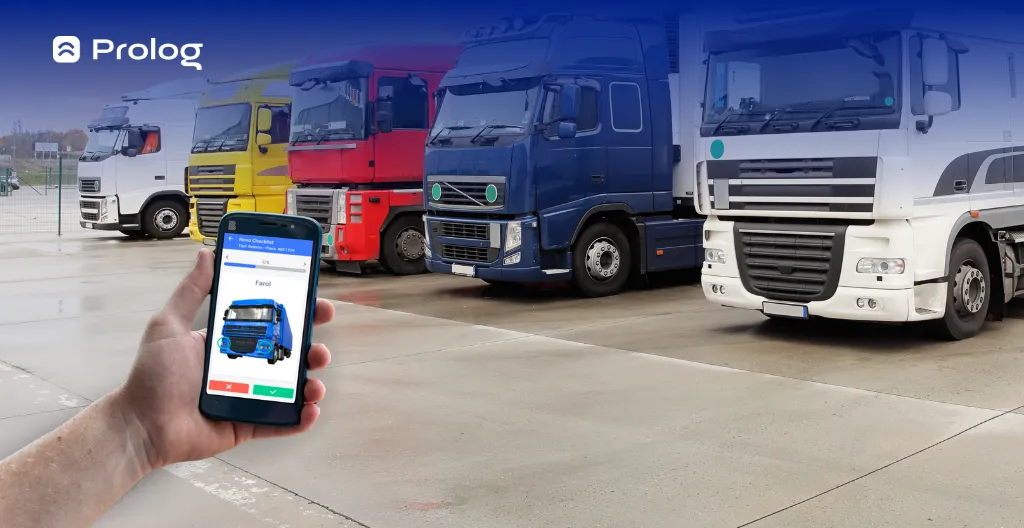
It can be a paper checklist for smaller operations or an electronic checklist system for larger fleets. In Prolog's electronic checklist, checklists are filled out on mobile phones that have the app, which helps bring record-keeping into the routine of the people who carry out the inspection.
Customize the checklists
Customize the checklists according to the vehicle types and operations of your fleet.
Include all the essential items to ensure a complete and effective inspection. You need to make sure the checklist is detailed enough to cover all the important aspects of maintenance and safety.
Train the team
Provide proper training for all drivers, mechanics and fleet managers on how to use the checklist. Explain the importance of completing the checklist regularly and how to carry out and record inspections correctly.
Carry out regular inspections
Establish a routine of regular inspections. This can include daily, weekly and monthly checklists, as well as specific inspections for preventive maintenance and post-trip checks.
Regular inspections help identify problems in advance and plan corrections in the best possible way, avoiding operational interruptions.
Analyze data and generate reports for continuous improvement
Use the data collected during inspections to generate detailed reports. Analyze this data to identify patterns, trends and areas that need improvement. Reports help you make informed decisions and plan maintenance more efficiently.
Free checklist templates to start using
To make it easier to implement the checklist in your fleet, Prolog offers free checklist templates that you can start using right away.
These templates were developed to cover the main items of your fleet's vehicles and there are even specific templates for different vehicle types. See all the available templates here, in the checklists tab (in Portuguese).
Free electronic checklist demo
In addition to the free templates, Prolog also offers a complete solution with its electronic checklist.
This platform makes it possible to customize checklists, carry out detailed inspections, generate automatic reports and keep track of each vehicle's maintenance history in a centralized and accessible way. When a nonconformity is flagged, work orders are generated automatically to arrange the correction.
Book a free demo of Prolog's electronic checklist.
Frequently asked questions
What is a fleet checklist and what is it for?
What are the types of fleet checklist?
What should a fleet checklist include?
How do you implement a checklist in the fleet?
Is a fleet checklist worth it for any company?
// newsletter
Fleet management content, straight to your inbox
Articles on tires, maintenance and fleet operations. No spam.