How to assess fleet tires: data to analyze
 Luiz Felipe 7 min read

Understanding how to assess fleet tires is an essential part of fleet management, allowing the operation to choose more suitable models, monitor assets’ useful life, and avoid decisions based solely on the perceptions of those using the vehicle.
But this knowledge needs constant updating. After all, various factors influence tire performance: pressure, tread wear, rotation, alignment, load, speed, temperature, impacts, and road conditions can change the results observed in the fleet.
In this post, see:
- How do you assess fleet tires?
- How can you collect data to assess tires?
- Why is knowing how to assess fleet tires important?
- How do you assess tires when buying?
How do you assess fleet tires?
To assess fleet tires and know which brands and models work best in your operation, you need consistent data on use, maintenance, and performance. For example:
- How many kilometers did they travel before retreading was needed?
- What was the average fuel consumption of the vehicle they were fitted to?
- After retreading, how many kilometers did the tire travel?
- How did the vehicle they were fitted to perform?
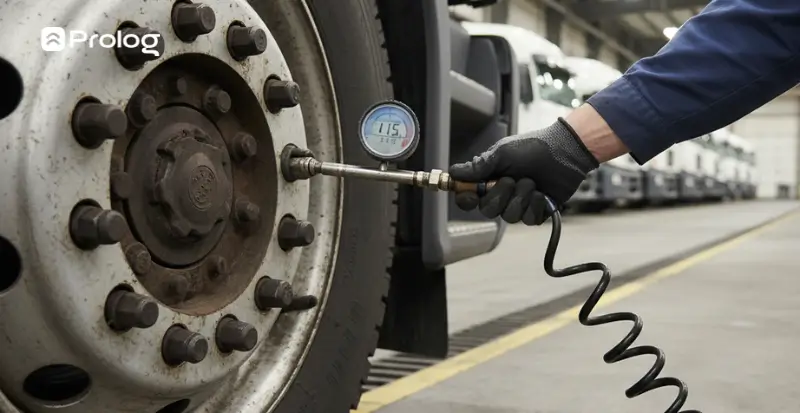
- What were the pressure, tread depth, wear, and visible damage like during inspections?
This is because tires bear all the impacts of vehicle weight and road conditions. Even in perfect driving condition, they can be affected more or less depending on other factors:
Mileage versus wear level
Comparing how far a tire has traveled with the wear level it has experienced is a way to understand that particular model’s average durability.
Although there may still be differences according to roads traveled, weather conditions, vehicle used, pressure applied, load carried, and maintenance, you get precisely this: an average of its durability in the fleet as it currently operates.
If a tire travels 10,000 km and its wear level is moderate, this may indicate:
- Its natural wear is faster than some other tire models;
- Its performance is moderate to low;
- Something is not right with your tire, vehicle, route, or maintenance routine.
It is not an exact answer, but a path you can navigate more quickly to find the best solutions sooner. It is also worth remembering that remaining tread depth must not fall below 1.6 mm, a condition identified visually through wear indicators.
Want to improve your fleet’s tire management? Talk to a Prolog specialist
Fuel consumption versus mileage
The amount of fuel consumed per route helps determine whether there are problems with the tires, engine, or how the driver drives. That is why controlling fuel and refueling on every route is so important.
This produces an average consumption figure per route or distance traveled and according to the vehicle model used. With this, whenever there are major changes, you can identify the problem more easily.
Thus, whenever a vehicle covers the same distance and you notice excessive fuel consumption, it is an indication to assess the tires. However, conclusions should not come from a single indicator: incorrect pressure, misalignment, uneven wear, overloading, impacts, and even road conditions can influence the result.
Vehicle inspection frequency versus wear level
Preventive maintenance is carried out according to a schedule set by the manager and must be followed, as it identifies damage and the need for vehicle corrections.
If neglected, it can change tire wear levels. During periodic inspections, it is worth checking inflation pressure, tread wear, and tire damage, as well as paying attention to rotation and alignment when they make sense for the operation type.
Therefore, when you notice that a tire that generally travels 15,000 km with moderate wear has suffered severe wear, investigate whether vehicle checklists are being completed and recorded corrections are being addressed. Maintenance after installation is one of the most relevant factors in preserving tire performance.
Retreading rejection versus mileage versus wear level
Retreading rejection can occur when a casing reaches assessment in an unsuitable condition for refurbishment. Rather than treating rejection as a single cause, establish the mileage, wear level, pressure used, load applied, recorded impacts, and general tire condition before it was sent for retreading assessment.
This way, you can arrange for the tire to be removed from the vehicle before reaching that level or adjust the inspection routine to reduce the chance of losing a casing that could still have value for the operation.
To know how to assess tires with maximum accuracy and confidence in generating better fleet results, these are some of the main factors you should always consider.
You also need the means to collect data so you can actually carry out your assessments.
How can you collect data to assess tires?
Through tire management, you can collect all the data needed to analyze performance. So what you need to do is establish a method for tire management to take place and make sure everyone fulfills their roles.
To start, you should understand which alternative is more viable for your operation: spreadsheets or tire management software.
How do you assess tires using spreadsheets?
This first alternative has lower implementation costs in certain cases, but comes with drawbacks, such as taking longer to collect and enter all the data.
This is because tire inspections, measuring pressure and tread depth, are performed using manual tools: a pressure gauge and/or manual tread probe.
With the information from these readings written on paper, you go to a computer and record it to gain a broader view of which tires meet expectations and which show warning signs requiring a work order.
The key here is maintaining standardization: if each person records things differently, compares tires at different times, or fails to record visible damage, the analysis loses strength. The goal is to combine mileage, wear, pressure, damage occurrences, and maintenance history without relying on the team’s memory.
How do you assess tires using a system?
With a system, you have the option of using an electronic measuring device that records the reading taken during the inspection and sends the data into the system. This reduces typing errors and increases fleet productivity.
The system also allows you to relocate tires from vehicles to inventory and vice versa, generate reports ready for analysis, and automatically generate WOs.
In addition to choosing one of these methods, you need to determine who is responsible for inspections, which metrics are most important to monitor, what protocols apply when adverse situations arise, and so on.
Why is knowing how to assess fleet tires important?
Knowing how to assess tires is beneficial not only for reducing premature disposal in the fleet, but also for:
- Discovering the exact time to replace them, identifying whether assets need retreading or disposal;
- Identifying problems sooner, whether with tires alone or the vehicle as a whole;
- Making more efficient fleet tire purchases.
As a result of these findings, you also generate more fleet savings, potentially reducing fuel consumption and costs of maintenance beyond what was planned.
Operational productivity also feels the effects, with better-performing vehicles and tires, faster and more practical inspection and analysis processes, and deliveries meeting set deadlines more often.
The greatest gain lies in turning scattered data into decision criteria. A tire with accelerated wear may point to the model chosen, but it can also point to improper pressure, misalignment, overloading, route impacts, or maintenance failures. That is why comparing price alone or mileage alone tends to leave part of the problem hidden.
How do you assess tires when buying?
If you do not yet have the fleet data needed to identify the best brands and models, some tips for assessing tires when buying include:
- Check wear indicators: TWI is not a performance score or an index predicting whether the tire will wear faster; it is a physical indicator that helps visualize the tread wear limit. Remaining depth must not be less than 1.6 mm.
- Analyze the tire’s technical information: Instead of treating purchasing as a simple comparison of “traction A–E,” assess the information applicable to the tire type, operation, and usage conditions. Pressure, wear, rotation, alignment, load, speed, and impacts enter performance analysis once the tire is in service.
- Identify its manufacturing date: The date helps understand tire history, but calendar age alone does not accurately predict a specific tire’s useful life. It should be considered alongside care, use, maintenance, and assessment of the asset’s condition.
- Check the load index: Remember that your vehicles have a maximum supported load and tires must match it. Size, speed rating, and load index are among the points to consider during replacement.
Simplify your management and value your time by bringing a nationally recognized tire management system into your fleet. Explore Prolog’s electronic tread probe and technology system kit in detail.
Frequently asked questions
My tires are lasting less than they should. What should I investigate first?
Should I use a spreadsheet or a system to gather tire data?
What should I look at in a new tire when I do not yet have fleet history?
Why is a tire rejected for retreading, and can this be avoided?
What does the fleet gain by assessing tires methodically?
// newsletter
Fleet management content, straight to your inbox
Articles on tires, maintenance and fleet operations. No spam.