Truck tire calibration: how to do it
 Luiz Felipe 11 min read
Correct truck tire calibration helps reduce the impact of roads on tires and keeps the vehicle in safer operating conditions.
Especially in Brazil, where only 13% of roads are paved, this care is indispensable for maintaining vehicle quality and avoiding problems along routes.
Even so, other factors besides road conditions can affect tire pressure, such as load weight, the number of trips made and the distance covered on each one.
Here is what we will cover:
- The importance of truck tire calibration
- How tire calibration works
- How to keep truck tire calibration up to date
- How to perform truck tire calibration properly
- Which is better: nitrogen or compressed air?
- When is the right time to inflate tires?
- When are tires underinflated?
- What are the risks of incorrect calibration?
The importance of truck tire calibration
Correct truck tire calibration is fundamental to ensuring tire safety, efficiency and durability, as well as directly affecting fleet operating costs.
The benefits include:
- Safety: proper tire calibration improves tire grip on the ground. Incorrect pressure can affect handling, stopping distance, braking grip and directional stability, essential points for safer driving in different road conditions.
- Fuel savings: correctly inflated tires reduce rolling resistance. When tires have low pressure, the vehicle tends to consume more fuel per kilometer traveled.
- Tire durability: maintaining correct tire pressure helps distribute vehicle weight and load evenly. Underinflated tires wear faster, and overinflated tires can suffer uneven wear, reducing the assembly's useful life.
- Vehicle performance: tires inflated according to the manufacturer's recommendation help the truck operate more predictably, with better traction, stability and braking ability.
- Lower maintenance costs: well-maintained tires also prevent damage to other vehicle components, such as the suspension and axle, reducing the need for emergency repairs and vehicle downtime.
- Legal compliance: in Brazil, the Brazilian Traffic Code establishes that safe traffic conditions are everyone's right. Keeping tires in good condition helps the fleet operate within this safety principle.
How does truck tire calibration work?
Truck tire calibration is the process of adjusting internal tire pressure to the level recommended by the vehicle manufacturer.
Each truck and mounting position may have a specific recommended pressure. This reference should be checked in the vehicle manual and applicable technical guidance, considering front and rear tires, load carried and operating conditions, such as paved or dirt roads.
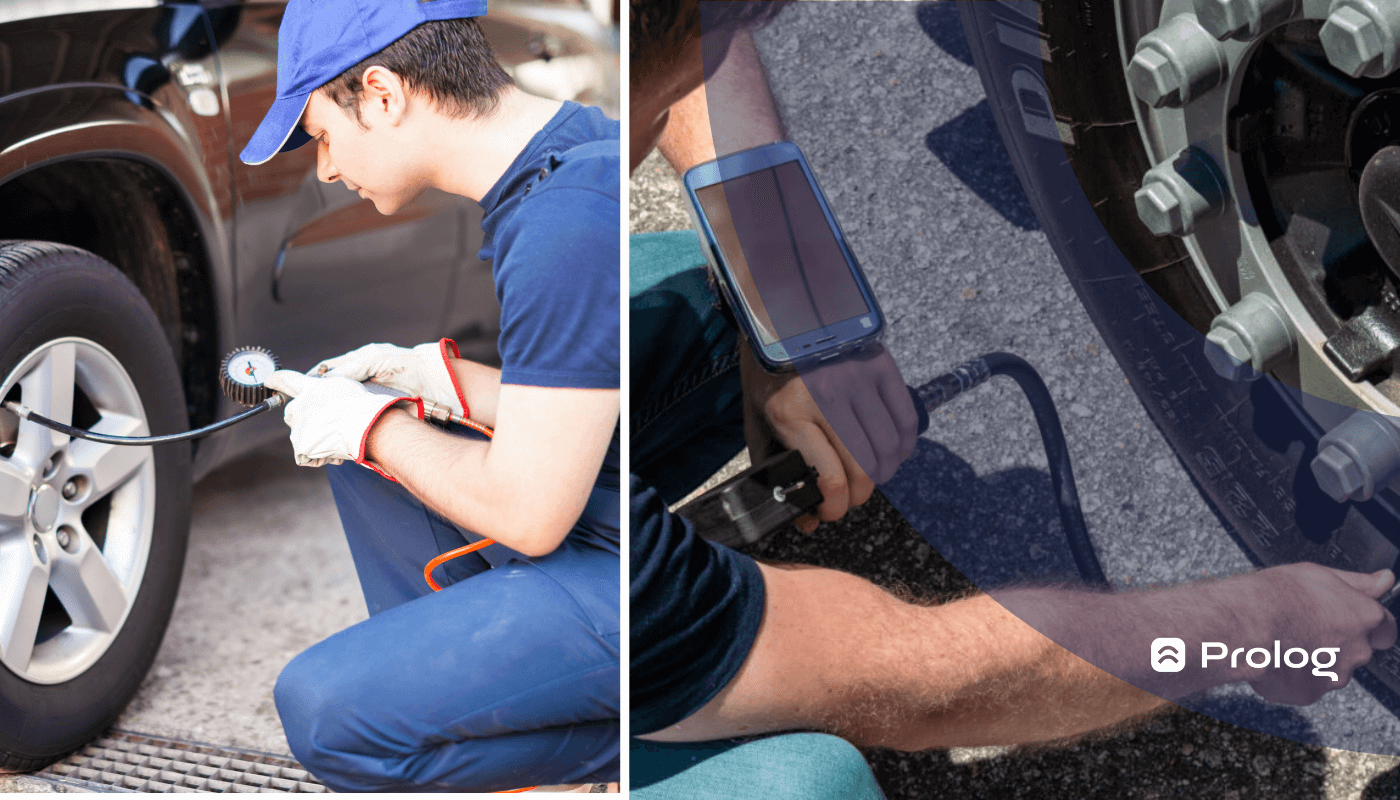
To measure and adjust tire pressure, you need a reliable, accurate tire pressure gauge and an air compressor. In fleets using electronic resources, pressure monitoring systems can support the routine, but periodic checks remain recommended even when the vehicle has this technology.
Before adjusting pressure, it is important to measure the current pressure of the tires. This should be done with cold tires, preferably before the start of working hours. Hot tires can give inaccurate readings because the air inside expands.
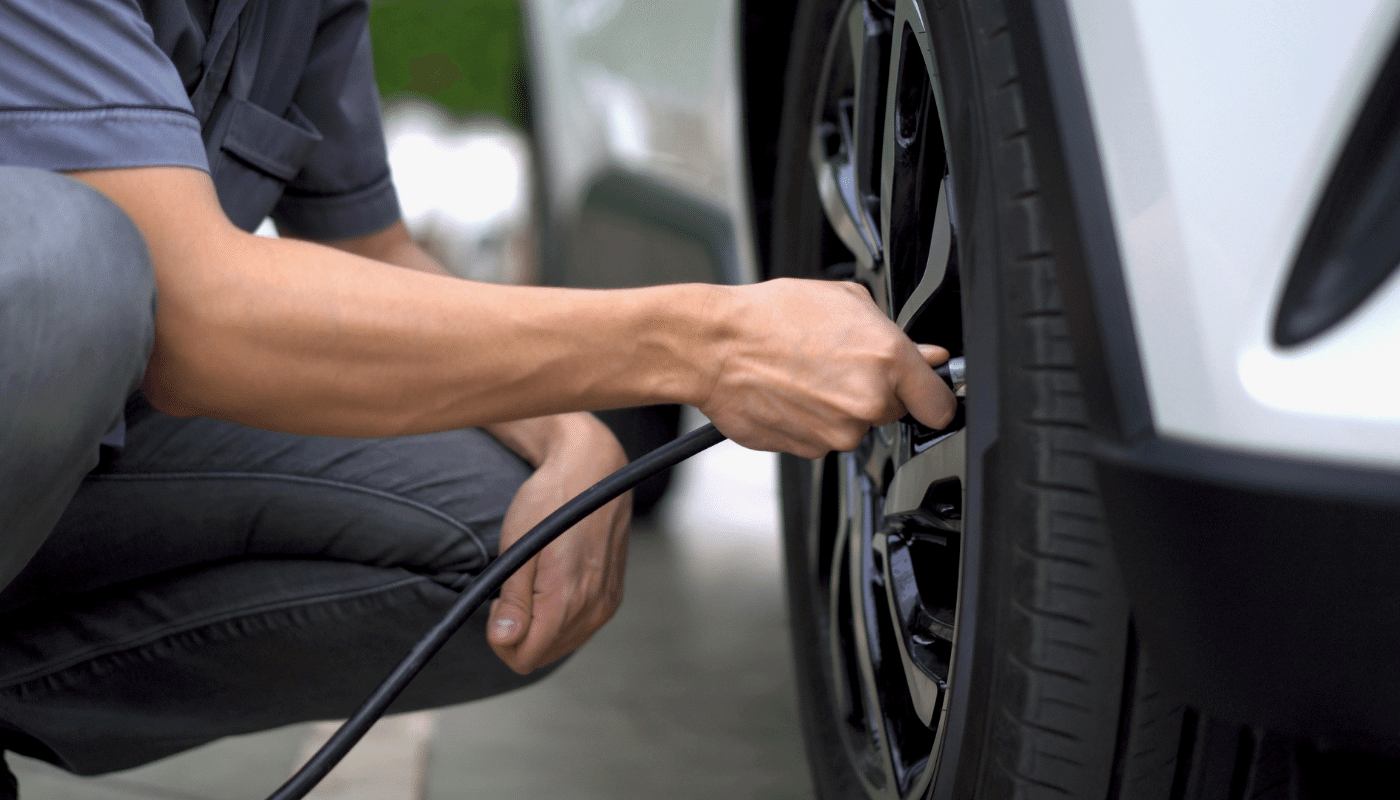
If the measured pressure is below the recommendation, use the air compressor to add air until reaching the correct level. If pressure is above the recommendation, release air through the valve until reaching the pressure specified for that vehicle and position.
It is important to adjust each tire individually, ensuring all are inflated according to specifications.
Tire pressure should be checked regularly, following a routine defined by the fleet. As a technical reference, it is worth checking every two to four weeks and always before longer trips or when there is additional load, adjusting as needed.
How can you keep truck tire calibration up to date?
1 Educate the truck driver
Although the driver has the main contact with the truck, they often do not know the importance of tire management. In other words, they do not know exactly which care is essential before, during and after a trip, including truck tire calibration.
One of the fleet manager's tasks is therefore to raise drivers' awareness of the importance of tires for vehicle performance and safety, as well as the tasks needed to keep them in proper condition.
This includes promoting regular training and talks on the importance of tire maintenance and the correct techniques for it.
2 Read the owner's manual
As part of educating the driver, reading each vehicle's owner's manual is essential.
This document contains valuable information on ideal truck tire calibration for each tire position. In some cases, there are variations depending on the situation, such as long or short trips, different loads or operation on dirt roads.
It is important to check the manual whenever acquiring a new vehicle and ensure the responsible driver knows their responsibilities. This helps avoid common errors that can compromise tire useful life and vehicle safety.
3 Preventive maintenance
Preventive maintenance is important for many reasons. First, it includes servicing the entire vehicle to analyze and reduce the need for repairs. Second, it helps reduce costs at the carrier.
Maintaining a schedule for this maintenance will make a difference for your tires. They need frequent checks to control wear, perform rotation and understand the need for retreading or tire disposal.
4 Tire inspection
Tire management is one of the most important responsibilities in fleet management. If you want to reduce tire costs, increase tire durability and save fuel, maintaining an inspection schedule is essential.
With an inspection schedule, you will be collecting data to:
- Keep truck tire calibration up to date;
- Understand which vehicle and driver open the most work orders;
- Control each tire's wear;
- Know the right time for rotation.
Measuring pressure and tread depth regularly will make tire control more effective.
Consequently, you will always know the right time for calibration, preventing tires from reaching a poor condition that could harm the fleet.
5 Calibration to ideal pressure
When a tire has low or high pressure, calibration is necessary. Correct pressure should follow the manufacturer's recommendation for the vehicle, considering tire type, axle, application and load. This information should be passed on to the drivers responsible for the vehicle.
The risks of driving with incorrectly inflated tires can range from premature tire loss, reducing these components' useful life, to preventing retreading and increasing fuel consumption, among others.

How do you perform truck tire calibration properly?
In general, calibration should follow a periodic routine. A good reference is checking pressure every two to four weeks and always before longer trips or when the truck will operate with additional load.
Maintaining this routine helps ensure tires are at the manufacturer's recommended pressure, avoiding unnecessary wear and reducing risks during operation.
Each manufacturer defines detailed specifications for the ideal pressure for the vehicle and tire positions.
Following these recommendations is fundamental to ensuring tires work properly and safely. This information should be checked in the vehicle manual and the manufacturer's technical guidance applicable to the fleet's configuration.
Calibration should be performed while tires are still cold.
Tires heated through use may show higher pressure due to expansion of the air inside, which can lead to an inaccurate reading. Inflating cold tires ensures a more accurate measurement for pressure adjustment.
Do not forget to check the spare tire. It also needs to be ready for use when needed, but pressure must respect the specification applicable to the vehicle and tire, without adding extra pounds of pressure as a fixed rule.
It is also worth offering these tips:
- Check tire pressure in a stable environment without major temperature variations.
- Avoid inflating tires immediately after a long trip to avoid inaccurate readings caused by heat buildup.
Which is better for truck tire calibration: nitrogen or compressed air?
Both methods have pros and cons, but the choice depends on the fleet's specific needs and operating conditions.
Generally, inflating tires with nitrogen is a superior choice for fleets operating in extreme conditions, seeking to maximize tire useful life and able to justify the additional investment.
Compressed air is a more practical and economical option for most fleets, especially those with easy access to regular maintenance and operating in less severe conditions.
Other points to consider when choosing between nitrogen and compressed air for truck tire calibration are:
Stability
Nitrogen is less susceptible to temperature variations, meaning tire pressure stays more stable in different weather conditions. This is beneficial for vehicles operating in environments with large temperature variations or covering long distances.
Compressed air is approximately 78% nitrogen, 21% oxygen and small amounts of other gases. The oxygen and moisture in compressed air cause tire pressure to vary more with temperature changes, potentially requiring frequent adjustments.
Moisture reduction
Nitrogen is dry and contains no moisture, helping prevent corrosion of internal tire and wheel parts. The absence of moisture also reduces the risk of deterioration of internal tire components.
Compressed air may contain moisture, especially if not properly treated. This moisture can cause internal corrosion and accelerate tire and wheel wear.
Tire useful life
Because of pressure stability and the absence of moisture, nitrogen-filled tires tend to last longer. Constant pressure prevents uneven wear, extending tire useful life.
Pressure variations and moisture in compressed air can cause uneven tire wear, potentially reducing useful life.
Cost and availability
The cost of inflating tires with nitrogen is generally higher than with compressed air. In addition, nitrogen availability may be limited, especially in more remote areas.
Compressed air is widely available and generally cheaper. Most air pumps at gas stations and repair shops use compressed air, making access and regular maintenance easier.
Safety
The pressure stability provided by nitrogen can improve safety by minimizing the risk of tire explosions and failures caused by extreme pressure variations.
Although compressed air is safe, pressure fluctuations can increase the risk of tire failures, especially in extreme conditions.
When is the right time to inflate tires?
To ensure tires are at the correct pressure, checking pressure every two to four weeks is recommended. This frequency helps detect and correct pressure loss, avoiding uneven wear and increasing safety.
Before starting a long trip, it is also essential to check and adjust tire pressure. Long trips can generate more heat during use, so it is important to start with the correct pressure to reduce problems along the way.
In operations involving more severe conditions, such as transport on dirt roads or very heavy loads, the fleet can increase checking frequency within its maintenance plan.
These conditions can cause tire pressure variations, requiring more rigorous pressure checks.
When are tires underinflated?
Tires are underinflated when they look flattened where they contact the ground. Regular observations before and after each trip can help detect this problem quickly.
In addition, one of the first signs of underinflation is steering feel. The driver may notice the vehicle feels heavier, the steering wheel pulls to one side or steering response is slow. These sensations indicate a lack of proper pressure.
Another sign of underinflated tires is increased rolling resistance, which makes the vehicle consume more fuel. If you notice an unexplained increase in fuel consumption, it is a sign that tires may be below ideal pressure.
Underinflated tires also tend to show uneven wear, especially on the edges. This happens because the ground contact area is not distributed evenly. Regularly checking tread depth can help identify this problem.
Finally, difficulty maintaining a constant speed can be a symptom of incorrect calibration. The vehicle may take longer to accelerate, and more accelerator force may be needed to maintain speed, especially uphill.
What are the risks of incorrect calibration?
Premature tire wear
Tires with improper pressure suffer uneven wear. Underinflated tires tend to wear faster, while overinflated tires may show uneven wear, especially when pressure is above the manufacturer's recommendation.
This uneven wear reduces tire useful life, increasing replacement frequency and associated costs.
Higher fuel consumption
Incorrect tire calibration increases rolling resistance, making the engine work harder to move the vehicle.
This results in higher fuel consumption, increasing operating costs.
Increased risk of tire blowouts
Low pressure causes greater flexing of tire sidewalls, generating excessive heat. This heat can lead to a tire blowout, especially at high speeds or on long trips.
Overinflated tires are more susceptible to damage from impacts with potholes or objects on the road, also increasing blowout risk.
Higher retreading rejection rate
Tires with uneven wear due to improper pressure often cannot be retreaded, wasting the opportunity for reuse and increasing spending on new tires.
Retreading is a common practice that extends tire useful life and is economically advantageous, but depends on even and appropriate wear of the original tires.
More spending on tire maintenance
Problems caused by improper tire calibration result in more frequent maintenance and repairs. This not only increases costs but also causes operational interruptions, affecting fleet efficiency and productivity.
Environmental impact
Higher fuel consumption and premature tire disposal due to incorrect calibration contribute to a negative environmental impact.
Increasing tire useful life and improving fuel efficiency are important measures to reduce both the number of tires discarded each year and the carbon footprint of transport operations.
Optimize your fleet's truck tire calibration with complete tire management. Discover the electronic tread probe and Prolog App digital system in a free demonstration. Book a time with one of our specialists.
Frequently asked questions
How often should truck tire calibration be performed?
What is the ideal pressure for inflating a truck tire?
What is the difference between inflating with nitrogen or compressed air?
How can you tell whether a truck tire is underinflated?
What are the risks of driving with an incorrectly inflated truck tire?
// newsletter
Fleet management content, straight to your inbox
Articles on tires, maintenance and fleet operations. No spam.