Minor vs. deep tire cracks: differences, repair, prevention
 Diego Paludo 9 min read
Truck tires are fundamental to the safety and efficiency of your operation. A tire with minor cracks, for example, not only impairs handling but can also cause financial losses through repairs, delivery delays and even accidents.
Keeping your fleet's tires in good condition goes far beyond calibration. You need to check the tread, bead, sidewalls and shoulders regularly to identify any sign of damage before that tire causes a serious issue.
With minor or deep tire cracks, the signs are clearly visible. And the sooner you act, the greater your chance of avoiding losses and extending the part's useful life.
Want to see this in your fleet? Talk to a Prolog specialist
Here, you will learn all about minor and deep tire cracks: what they are, how to tell them apart, whether they can be repaired and, above all, how to prevent this damage in your fleet.
See the topics:
- What are minor tire cracks?
- Can tires with minor cracks be restored?
- What is a deeply cracked tire?
- What is the difference between minor tire cracks and deep splits?
- Can a deeply cracked tire be repaired?
- Is a deeply cracked tire dangerous?
- How should tires with minor or deep cracks be disposed of?
- How can you prevent minor and deep tire cracks?
Read on to learn how to protect your fleet, save on maintenance and reduce accident risks.
What are minor tire cracks?
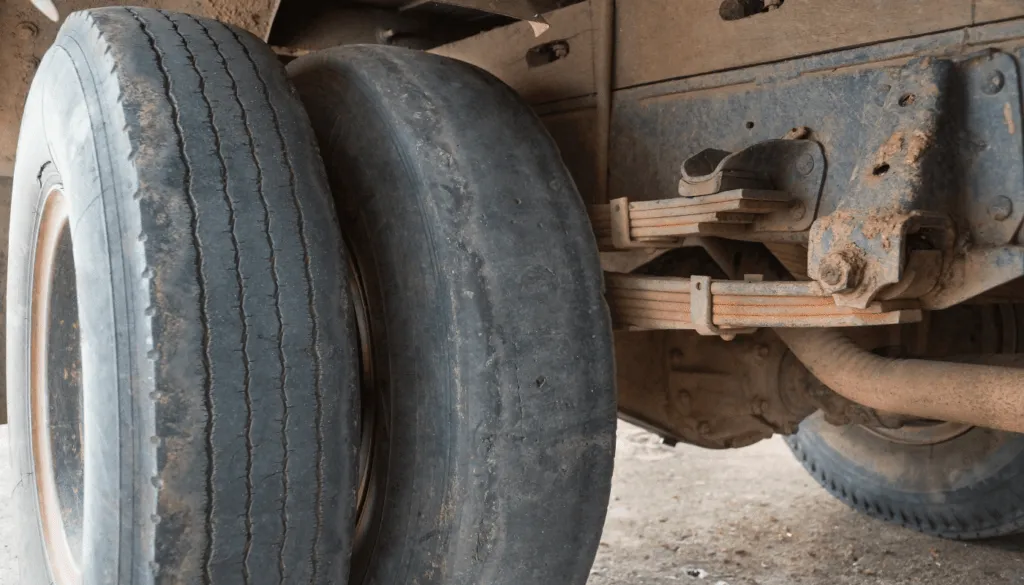
Minor tire cracks occur when small fissures appear in the rubber, usually near the bead, the area surrounding the wheel. These fissures signal the beginning of a future split and warn that the tire needs attention.
In other words, you can recognize minor cracks by small cuts in the tire sidewall, always near the wheel. This damage not only compromises operational safety but can also shorten the part's useful life.
But why do tires develop minor cracks?
The most common cause is brake overheating, usually caused by a lack of maintenance and proper adjustment. The heat transfers to the wheel and starts drying out the rubber.
Other factors also contribute to cracks, such as:
- Persistently irregular calibration;
- Excessive braking on slopes;
- Carrying weight above the manufacturer's recommendation.
A less common mistake that also causes cracks is using rims and wheels of incompatible sizes for the tire.
Want to see this in your fleet? Talk to a Prolog specialist
And when the bead cracks, is the cause the same?
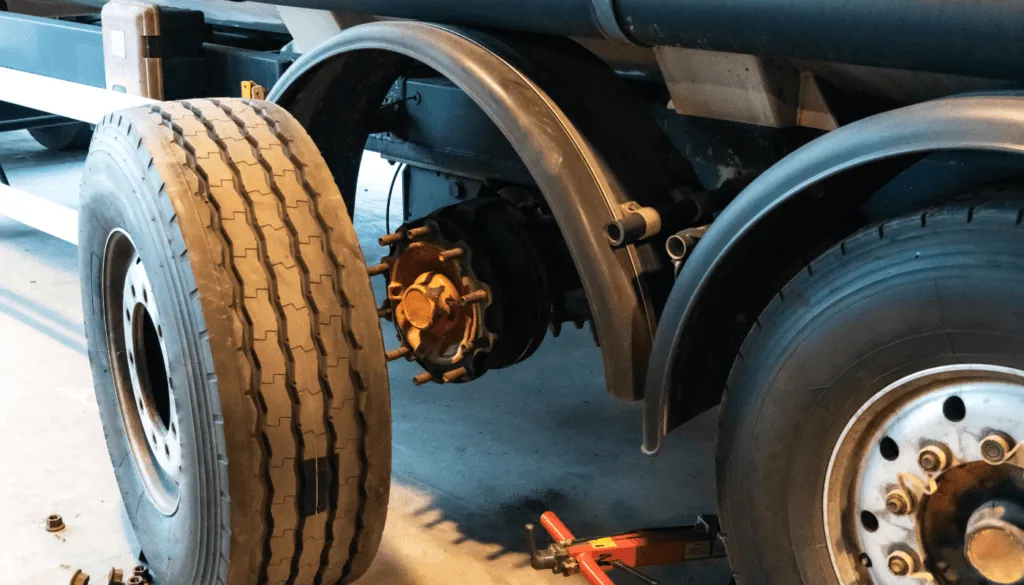
It can be, yes. Usually, however, bead cracks arise from a lack of lubrication during wheel mounting or removal. That is why these tasks must only be performed at specialist facilities.
If your transport company has neither the professionals nor a suitable station for this work, take the tire to a specialist workshop.
Remember: if damage is limited to the rubber, restoration can still be assessed. However, if the bead is compromised, disposal is the best decision to avoid accident risks.
Can tires with minor cracks be restored?
Depending on the severity and location of the cracks, you can still restore the tire and extend its useful life. Small fissures in the rubber can be addressed through preventive maintenance, preventing them from developing into larger splits.
When damage is limited to the rubber, two solutions are often considered in a restoration assessment. The key is to avoid treating any deep or extensive crack as an automatic case for retreading: the decision must consider the location of the damage and whether the tire structure remains intact.
- Vulcanization: this process heats rubber together with a vulcanizing agent, which repairs small fissures and restores some tire elasticity. It is ideal for superficial, localized cracks when the tire structure remains intact.
- Retreading: involves replacing worn or damaged tread while retaining the original tire casing. It must therefore not be presented as a general solution for deep cracks: it depends on casing condition and technical tire assessment.
But which alternative should you choose?
- If the crack is small and superficial, vulcanization is usually sufficient.
- If the issue involves tread wear and the casing is intact, retreading can be considered; if depth, location or structure is in doubt, a specialist should assess the tire before any decision.
However, if cracks reach the bead or the tire's internal structure, neither process guarantees safety, and disposal is the most appropriate choice to avoid accidents and operational losses.
In summary, you can restore tires with minor cracks when damage is limited to the rubber, choosing vulcanization or retreading according to an assessment of the crack and casing, but any structural compromise requires immediate replacement.
What is a deeply cracked tire?
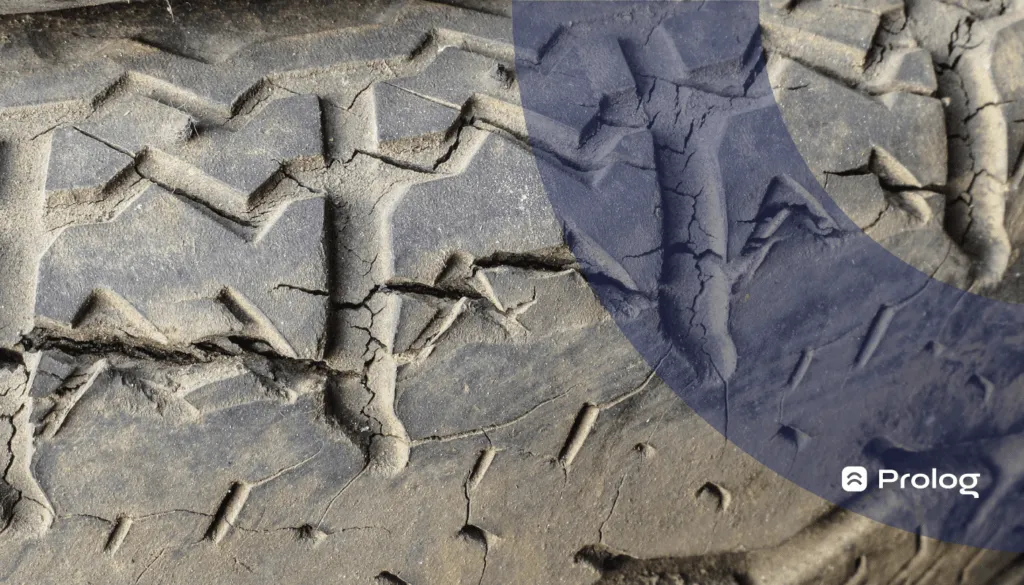
A deeply cracked tire has more severe damage than a tire with minor fissures. It occurs when the rubber splits deeply, forming visible fissures that can compromise tire structure.
The most common causes of deeply cracked tires include:
- Prolonged exposure to sunlight and heat, which dries out rubber;
- Excessive loads, above the manufacturer's recommendation;
- Inadequate or irregular calibration, which increases pressure and friction on the tread;
- Maintenance failures, such as a lack of regular inspections and inadequate lubrication;
- Advanced tire age, even without covering long distances.
If you identify a deeply cracked tire in your fleet, do not risk continuing to drive. The safest action is to discard it and replace it immediately, ensuring the safety of the vehicle, driver and cargo.
What is the difference between minor tire cracks and deep splits?
It is simple: a tire with minor cracks has small fissures in the rubber and represents the beginning of a split. A deeply cracked tire has an expansion of these fissures, making them more visible and dangerous. Unlike minor fissures, a deep split indicates that the part has already suffered intense wear or prolonged stress, requiring immediate attention.
Furthermore, unlike tires with minor cracks, deeply cracked tires can rarely be restored. Fissure depth compromises the part's integrity, making use risky and significantly increasing the likelihood of accidents.
In summary, while minor cracks can still be observed or repaired, a deeply cracked tire requires immediate replacement to keep your fleet safe.
Can a deeply cracked tire be repaired?
No. Deeply cracked tires have no safe repair.
By contrast, tires with minor cracks limited to the rubber can be assessed for vulcanization or retreading. However, when a crack reaches the bead or internal structure, replacement remains the safest option.
Superficial cuts caused by sharp objects can sometimes be repaired, but deep cracks, especially in the sidewalls, pose a safety risk and require immediate tire disposal.
It is always advisable to consult a specialist to assess damage severity and decide whether the tire can safely be repaired or replacement is the only safe option.
Is a deeply cracked tire dangerous?
Yes, it is dangerous. When deep cracks develop in tires, air leaks and blowouts are possible. Rubber can break apart and, depending on speed, hit other vehicles on the highway, causing serious accidents.
Deeply cracked tires also compromise truck handling and stability, increasing the risk of skidding, especially in rain or on slippery roads. Wear also overloads other vehicle components, such as suspension and brakes, raising maintenance costs and the likelihood of failure during operation.
Therefore, identifying cracks early and replacing damaged tires is essential to protect your fleet, drivers and cargo.
How should tires with minor or deep cracks be disposed of?
When tire damage is irreversible — such as cracks reaching the bead or deep splits — replacement is mandatory. However, incorrect tire disposal can cause financial losses, safety risks and environmental impacts.
From purchase to disposal, every choice should therefore be informed, considering what is best for the fleet.
Why does proper disposal matter?
- Environmental impact: end-of-life tires require proper disposal and, when discarded incorrectly, create an environmental liability that can put the environment and public health at risk. These assets can also take hundreds of years to degrade in nature, up to 600 years.
- Fleet impact: tires discarded early represent lost investment, since their full useful life was not used. A survey by Joanini Transporte e Logística shows that up to 70% of retreaded tires return to the fleet.
- Safety: tires outside specifications increase accident risk, endangering the driver, cargo and third parties.
How to dispose of tires properly
- Assess the tire: identify whether it can be restored (superficial rubber cracks) or requires disposal.
- Send it to certified workshops or companies: use facilities that perform retreading, recycling or environmentally sound disposal.
- Record the disposal: keeping history updated helps monitor tire life cycles and reduce unnecessary early disposal.
These practices protect the fleet, cut costs and comply with environmental standards, making tire management more efficient, safe and sustainable.
According to the Associação Nacional da Indústria de Pneumáticos (Anip), out of every 100 tires replaced, 45 go to collection points because they are unfit for use. Of these, 67% become fuel in the cement industry and the remainder are recycled, becoming new products.
How can you prevent minor and deep tire cracks?
The best way to prevent minor and deep tire cracks is through efficient tire management. Closely observing fleet tire condition lets you identify wear and issues before they become serious, avoiding delays and losses.
Today, various tools make this management easier, from detailed spreadsheets to intuitive apps that let you record periodic inspections and monitor pressure, tread depth and other wear indicators.
Some practices also help extend tire useful life:
- Perform regular checklists: inspect brakes and suspension, ensuring they are well maintained, since components in poor condition accelerate tire wear.
- Plan routes and loads: distribute loads appropriately, using suitably sized trucks or splitting loads between vehicles when necessary.
- Rely on qualified professionals: when in doubt, only a specialist can say whether the tire is fit to remain in service.
These practices protect your fleet, prevent premature disposal and reduce maintenance costs.
To explore the subject further, you can download the complete resource on extending tire useful life and discover practical strategies to reduce wear and optimize operational results.
Want to see this in your fleet? Talk to a Prolog specialist
Frequently asked questions
Can a deeply cracked tire be repaired?
What is the difference between minor tire cracks and deep splits?
Why do truck tires develop cracks?
Is a deeply cracked tire dangerous?
Can a tire with minor cracks be restored?
How can fleets prevent minor and deep tire cracks?
// newsletter
Fleet management content, straight to your inbox
Articles on tires, maintenance and fleet operations. No spam.