Trucks in the city: restrictions, schedules and routes
 Jade Zart 5 min read
Fleet managers face the ongoing challenge of balancing efficiency and compliance when planning truck operations in urban areas.
That is because driving a fleet of trucks in urban areas is a task that requires more than skill behind the wheel on the driver's part.
In fact, it requires careful planning and an understanding of the rules and limitations imposed on cargo vehicles in cities — and that is your role.
That is why you need to frequently look for updates and understand the local legislation of each region along the route used by the truck.
Check out below:
- How does freight transport work in urban centers?
- What are the restrictions on trucks in urban areas?
- Where can't trucks run?
- What are urban cargo vehicles?
- How do you plan an urban logistics operation?
How does freight transport work in urban centers?
Freight transport in urban centers is a process that requires planning and adaptation to the unique characteristics of the urban environment.
This type of operation involves coordinating routes that minimize disruption in the heavy traffic of cities and respect the restrictions of specific areas.
In addition, fleet managers need to pay attention to local regulations, such as vehicle weight and dimension limits, restricted hours for truck traffic and low-emission zones.
Efficiency in urban freight transport also depends on well-planned logistics that consider delivery windows, the proximity of destinations and load optimization to reduce unnecessary trips.
What are the restrictions on trucks in urban areas?
Restrictions on trucks in urban areas are measures implemented to ensure safety, traffic flow and a reduced environmental impact in cities. However, they can vary from one city to another.
They generally include limitations such as traffic hours, when trucks are prohibited from driving during certain hours, especially at peak times.
There are also restrictions related to vehicle size and weight, limiting large trucks' access to certain areas, such as historic centers and residential zones.
Some cities also establish low-emission zones, which vehicles that do not meet certain emission standards cannot enter.
In addition, there may be specific regulations for unloading goods, with specific places for this purpose, in order to avoid congestion and disruption.
It is essential that you stay up to date with these restrictions and plan delivery routes accordingly, in order to avoid fines, delivery delays and other operational issues.
Where can't trucks run?
In urban areas, there are specific places where trucks are prohibited or have restricted traffic.
These areas include historic centers, narrow streets, residential zones and areas near schools and hospitals, where heavy truck traffic could cause congestion, damage to infrastructure or safety risks.
Some regions may also have weight and height restrictions, preventing large trucks from passing over certain bridges or through certain tunnels.
What are urban cargo vehicles?
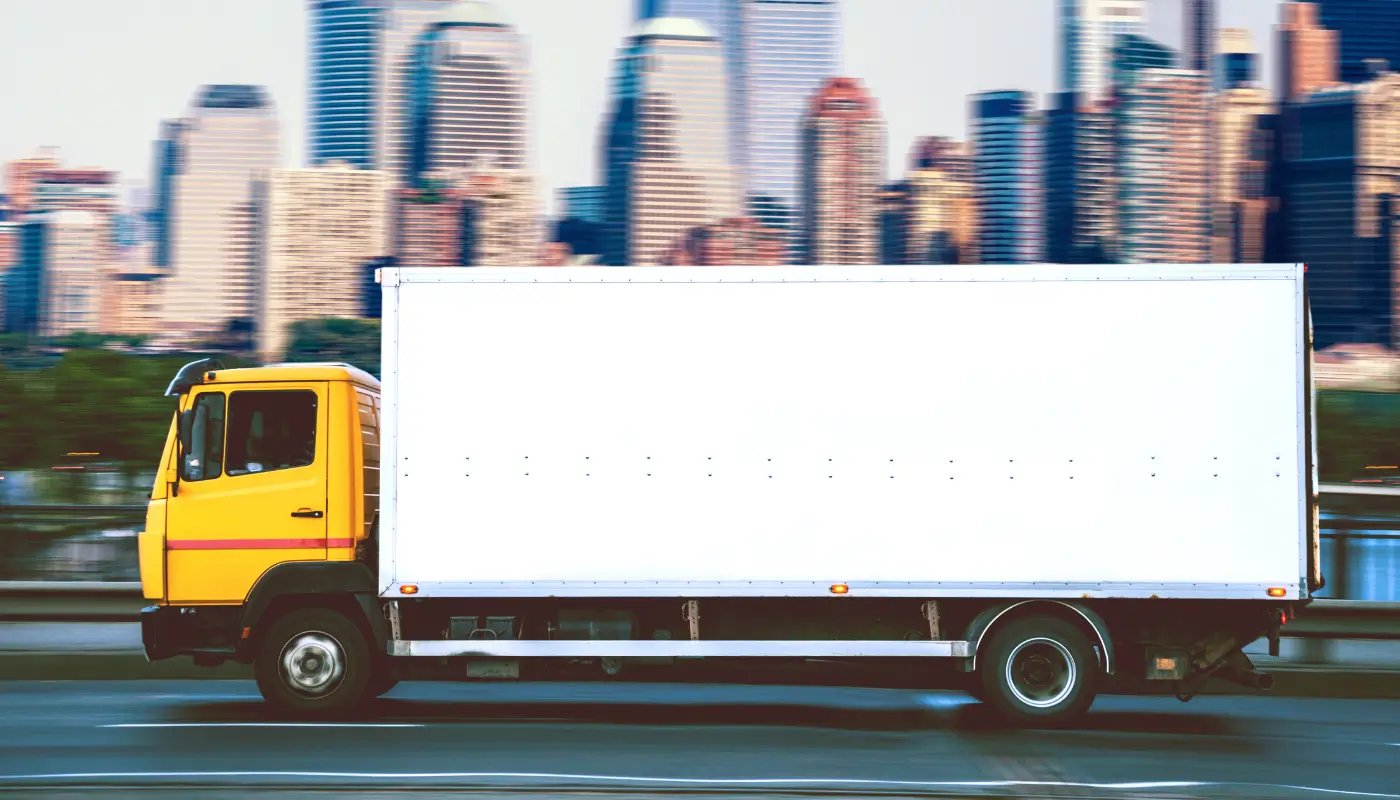
Urban cargo vehicles are typically designed to navigate efficiently through the narrow, congested streets of cities while complying with local regulations.
These vehicles vary in size and capacity, adapting to the specific needs of urban transport.
They are:
- VUC (Veículo Urbano de Carga, Brazil's urban cargo vehicle): compact and agile, they are ideal for quick deliveries and getting around on narrow roads. They have limited size and weight to meet urban restrictions.
- Light trucks: they offer a good combination of load capacity and maneuverability, suitable for a variety of urban deliveries.
- Vans: usually used for deliveries of small volumes, they are ideal for carrying parcels quickly and efficiently in urban areas.
- Electric trucks: a sustainable option that meets the demand for ESG in transport, they are ideal for areas with emission restrictions. They offer the additional advantage of being quieter, which is also beneficial in residential areas.
How do you plan an urban logistics operation?
Know the local regulations
Planning an urban logistics operation starts with in-depth knowledge of local regulations. For example, understanding the specific hours when trucks may or may not operate, and weight and height limits for vehicles in certain areas.
Being aware of and up to date on these rules helps avoid fines, delivery interruptions and other operational setbacks. Likewise, it influences the choice of vehicles and route planning — which are the next steps.
Use the most suitable vehicles
Vehicle models should be selected according to the route they will cover. You need to find a balance between the size of the demand to be met and the traffic restrictions on trucks in urban areas.
Optimize fleet routing
You can plan the most efficient routes, taking into account traffic, distances, delivery deadlines and the specific restrictions of each area.
To help with this task, there are smart technologies that consider real-time data and allow direct communication with drivers so that they always use the best paths.
This not only avoids issues with truck traffic in urban areas, but also reduces trip time and the vehicle's fuel consumption.
Monitor vehicles in real time
In the same way that a system helps generate more efficient routes, there are also cargo monitoring and vehicle monitoring technologies that make it possible to keep track of the trip and make quick route adjustments easier in case of congestion or unexpected delays.
One of the most widely used in vehicle fleets today is telematics.
In addition to this real-time tracking, it collects and records data on the trip's average speed, makes it possible to understand each driver's driving behavior, among other valuable information for your management.
Provide driver training
Drivers should be familiar with best practices for urban driving, including navigating narrow, congested streets and complying with local regulations.
They should always know where to park the vehicle to complete their delivery and where there are traffic restrictions for trucks in urban areas.
Want to deepen your knowledge and skills in managing urban logistics operations? Download our free e-book “Fleet Management Guide – Generate savings and safety in your operations” (in Portuguese).
Frequently asked questions
Where can't trucks run in the city?
What are the restrictions for trucks in urban areas?
What vehicles are used for urban cargo?
How do you plan an urban logistics operation?
What happens if the fleet ignores urban restrictions?
// newsletter
Fleet management content, straight to your inbox
Articles on tires, maintenance and fleet operations. No spam.