Benefits of tire management for fleets
 Luiz Felipe 6 min read
For anyone starting out in transport operations, understanding the benefits of tire management is necessary to take proper care of assets.
If you are still exploring the possibilities and assessing tire management processes before putting them into practice in your fleet, there are numerous advantages, as you will see below.
See all the benefits of tire management:
- Longer tire life;
- Avoiding premature casing loss;
- Avoiding retread rejection;
- Lower fleet fuel consumption;
- Generating data for in-depth analysis;
- The ability to assess vehicle performance and preventive maintenance routines;
- Identifying inappropriate driving behavior;
- Greater safety on the routes traveled;
- Lower fleet operating costs.
Longer tire life
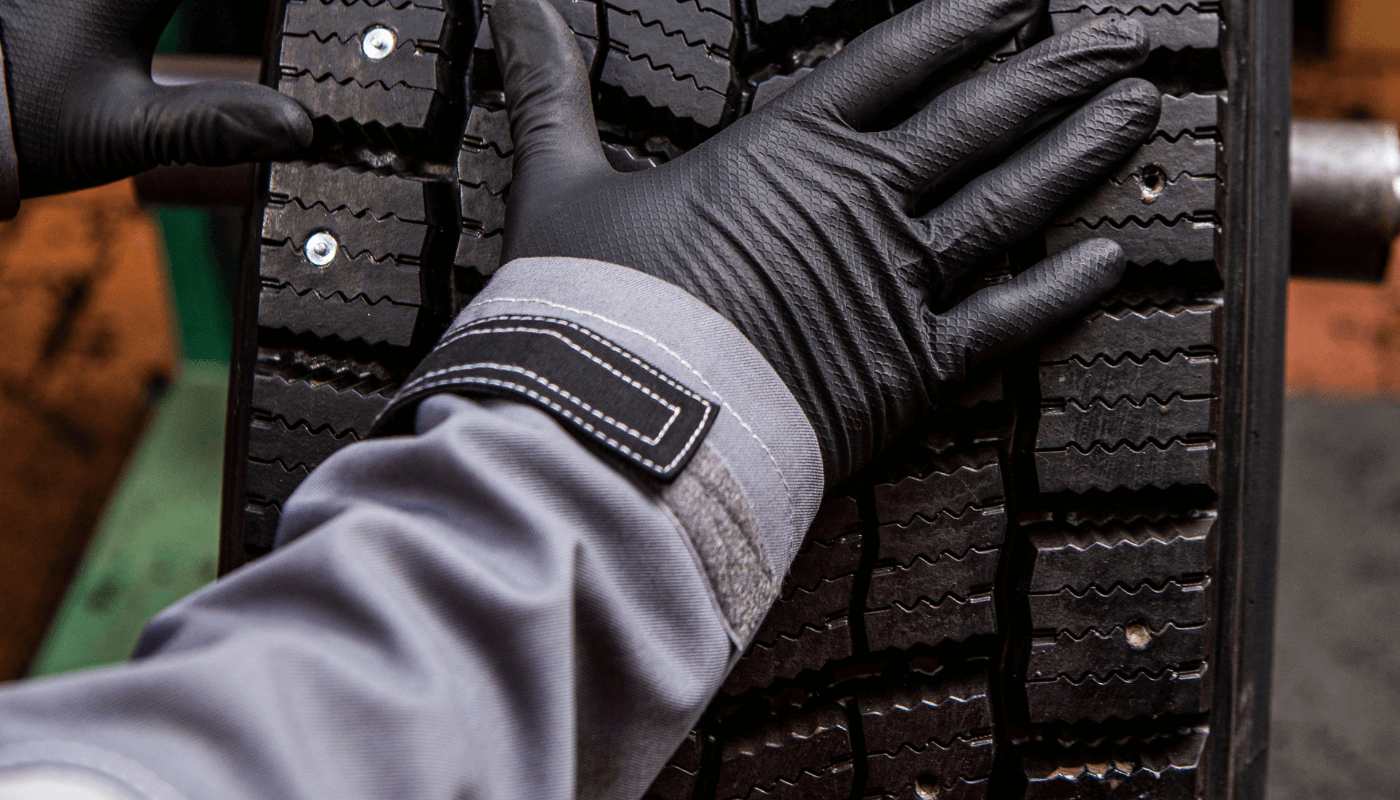
One fundamental task in tire management processes is measuring pressure and tread depth.
As you keep track of these factors, you can identify the need for calibration or maintenance of the assets, always keeping them in better running condition to reduce the chance of damage and irregular wear. Low-pressure tires generate more heat, experience more stress and can develop irregular wear and internal damage.
Avoiding premature casing loss
Increasing durability also means avoiding the premature loss of your fleet's tires.
This early disposal generally happens because of casing fatigue, when the inside of the tire is already damaged and refurbishment and repairs to the outside — the asset's tread rubber — are no longer possible.
Avoiding retread rejection
This type of casing damage also leads to retread rejection. Tire retreading is a type of refurbishment that replaces the original tread with a new one and can help reduce tire costs and extend the casing's useful life when it is still in suitable condition for the service.
Rejection happens when internal tire damage has become too severe to allow retreading, because driving on that tire would be unsafe and would also affect fleet performance.
Lower fleet fuel consumption
Keeping tires in good running condition has a positive impact on other aspects of the vehicle. These include lower fuel consumption.
This happens because maintaining the correct pressure helps maximize fuel economy. Underinflated or heavily worn tires, on the other hand, require more engine power to roll and can increase the amount of fuel burned to generate movement and speed.
If tires are working properly and in ideal condition, combustion is more efficient, and you can achieve greater savings in your fleet. For example, MC Transportes LTDA began saving 4% on fuel after starting tire management.
Generating data for in-depth analysis
The major trend of collecting and analyzing data is increasingly present in transport operations.
We are in the era of analytical management, which uses information from fleet routines to make decisions that are more efficient and relevant to each situation.
It is a way to make more use of your own experience instead of basing growth and operating strategies on external factors, such as copying what other companies are doing.
Tire data makes the following analyses possible:
Tire CPK
Cost per kilometer, or tire CPK, is a calculation used to find the cost of each km driven on a tire. This makes it possible to identify which tires offer the best value for money in the operation and which have high costs.
It is also important because it generates long-term savings by purchasing tires that are better suited to the fleet.
For the calculation, you need the tire's purchase cost and total mileage before refurbishment or disposal.
If the tire undergoes maintenance and refurbishment services, those costs and the mileage after repair must also be included in the calculation.
Main problems and reasons for wear
By measuring tire wear levels, you can analyze the types of wear that occur and identify the main problems causing damage in your fleet.
For example, pronounced wear on the tire's shoulders can mean that there is a low-pressure problem.
If you use tire management software, this type of analysis is already performed automatically as you enter data into the software. Your role would then be to assess whether the problem really makes sense and the best ways to apply the necessary corrections.
Tire replacement forecast
The tire replacement forecast is calculated from tire history, identifying the useful life of that particular model and also assessing mileage and tread depth data.
Having this expected date also helps the fleet plan purchases and inventory replenishment.
The ability to assess vehicle performance and preventive maintenance routines
Some benefits of tire management are not directly related to tires, and this is one of them.
Tires suffer wear and damage caused by faults in other vehicle parts and components, but this can only be identified if tire management is taking place.
Otherwise, you may wrongly conclude that the tires themselves are the problem and replace the make and model used with one that may even offer worse quality and performance.
Vehicle performance is assessed through the maintenance it undergoes, costs incurred, fuel consumed and also tire condition.
Just as tires affect vehicle performance, the reverse is also true. If a tire has the correct pressure and its care is up to date, but it continues to show irregular wear, the problem may be in the vehicle.
Some suspension parts may be defective or faulty, or alignment and balancing services may be overdue. The braking system is also directly related to tires, since harsh braking causes localized tread wear.
These are factors you notice and adapt to in the fleet's preventive maintenance routine. If these problems are occurring, you need inspections and services scheduled at shorter intervals.
Identifying inappropriate driving behavior
If calibration is up to date and tread depth is measured regularly but problems keep appearing, drivers may be behaving or driving inappropriately.
Excessive acceleration and harsh braking are common actions, but they cause major damage to tire rubber. This is therefore another way of assessing whether drivers follow good driving practices.
Greater safety on the routes traveled
Speaking of good traffic practices (in Portuguese), caring for tires also increases road safety.
Driving with correct calibration and keeping track of tread depth helps maintain tire grip on the ground, especially in bad weather, and contributes to more stable driving.
Lower fleet operating costs
The factors above, combined, reduce operating costs as a whole.
If there are fewer vehicle maintenance problems, less premature tire loss and lower fuel consumption, fleet operating costs will consequently be lower.
Savings also come from the analyses generated, giving managers answers about which tires are best and increasing the number of retreaded tires when casings are suitable for the service, since retreading can help reduce tire costs compared with buying a new tire.
You can learn about these and other benefits of fleet management and tire management in our complete, free e-book: Tire management guide for fleet savings and productivity (in Portuguese).
Frequently asked questions
My tires are not lasting as long as they should. What should I investigate first?
How do I calculate a tire's CPK?
Does incorrect tire pressure increase fuel consumption?
What is the difference between premature casing loss and retread rejection?
How can I predict when to replace fleet tires?
// newsletter
Fleet management content, straight to your inbox
Articles on tires, maintenance and fleet operations. No spam.